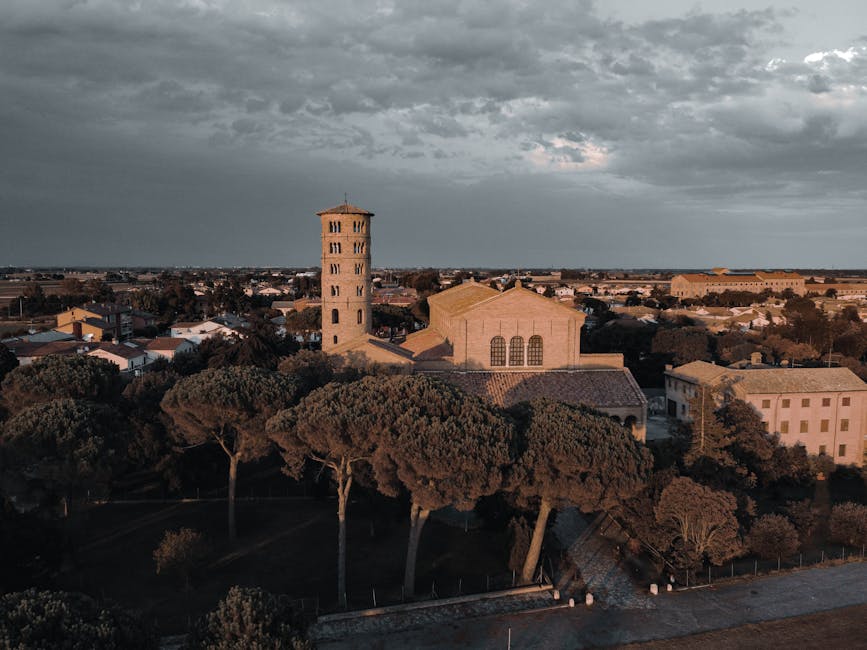






Introduction: Mosaics and Emperors — The Byzantine Visual Language in Ravenna
Ravenna is a city that speaks in images. Between the 5th and 6th centuries, as the Western Roman Empire was collapsing and the Byzantine Empire sought to project power in Italy, Ravenna became an artistic and political testing ground where mosaics were far more than decoration — they were bold statements of power, faith and imperial identity. These glittering surfaces, made of glass, stone and gold tesserae, communicate a dual theological and political message: the emperor or patron who funded the building is placed within both the heavenly and earthly order. Saints, emperors, processions and inscriptions are all visual cues meant to be read by those who enter these sanctuaries.
This guide is written for the curious traveler who wants to know not only where to go in Ravenna but how to read and appreciate the deeper meaning of its Byzantine mosaics. We’ll visit the must-see sites — Basilica di San Vitale, Mausoleo di Galla Placidia, Basilica di Sant’Apollinare Nuovo, Battistero Neoniano, Museo Arcivescovile, Basilica di Sant’Apollinare in Classe and the Mausoleo di Teodorico — and for each one provide the exact address, typical opening hours, ticket prices in euros and immersive descriptions that help you picture the visit. You’ll also find practical tips: best times to avoid crowds, camera settings, basic rules of conduct inside the buildings, and ideas for extending your visit beyond the monuments (nearby museums, cafés and strolls).
Reading these mosaics takes time and a careful approach: watch the posture of figures, the direction of their gaze, imperial symbols (globes, diadems, purple robes) and inscriptions in Greek or Latin. In Ravenna, imperial presence is often made visible through portraits, offering gestures or symbolic appearances — emperors shown beside Christ or saints to underline their legitimacy. Understanding these signs will enrich your visit and turn a simple sightseeing walk into a real immersion in the gradual crafting of Byzantine political imagery.
Finally, this guide favors a practical, contextual approach: you’ll find historical and artistic descriptions as well as up-to-date practical information — hours and prices — so you can plan your stay in Ravenna without surprises. Mosaics, with their shimmering surfaces and dense narratives, reward slow, repeated looking: come back at different times, view them from near and far, and let the changing light transform the gold and glass throughout the day. Enjoy your visit, and let Ravenna’s emperors and saints tell you their stories in images.
Basilica di San Vitale — The Major Imperial Project
Address: Basilica di San Vitale, Piazza San Vitale, 2, 48121 Ravenna RA, Italy.
Opening hours: generally 09:00–18:00 (last entry 17:30); winter hours sometimes 09:00–17:00. Closed December 25 and January 1. It’s strongly recommended to check official times online or at the ticket office, as hours can vary by season and religious events.
Price: single-entry ticket around €7.00 (basilica only). Combined tickets are available through the « Ravenna Musei » pass (see combined ticket section). Reduced fares and free entry for children, students and seniors exist under local rules; bring ID for discounts.
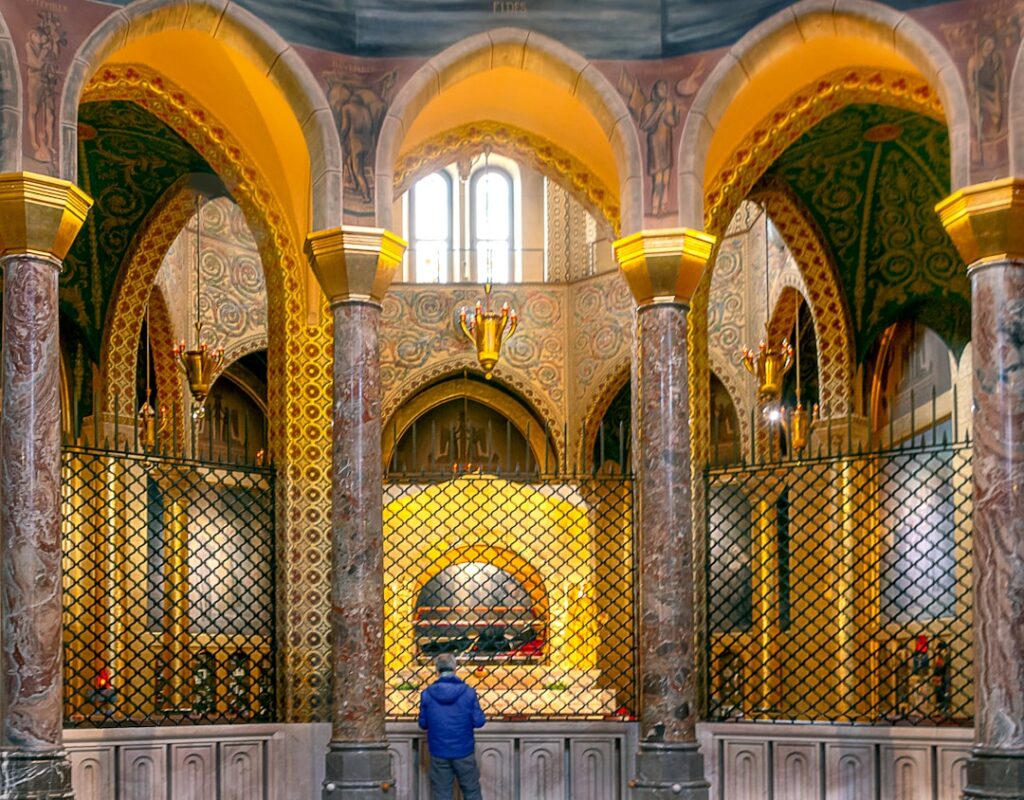
Immersive description: Basilica di San Vitale is a masterpiece of Byzantine architecture in the West. Built between 526 and 547 under Bishop Ecclesius and completed during Emperor Justinian’s reign, the church is notable for its octagonal plan, central dome and diffuse light that accentuates the wall mosaics. Inside, the iconography is ambitious: biblical scenes, angelic figures and, most famously, the paired processional panels showing Emperor Justinian and Empress Theodora in liturgical procession on opposite sides of the sanctuary. These imperial portraits, rich in gold and symbols (purple robes, halos, incense offerings), were designed to connect temporal power with divine authority.
Local tips: arrive early to benefit from soft morning light that highlights the yellow and golden tones of the mosaics with fewer people around. Move slowly inside and pay attention to the tesserae — step closer (without touching) to see how the glass is cut and set, then step back to appreciate the shimmering overall effect. For photography, use a moderate aperture (f/5.6–f/8) and mid-range ISO; flash is prohibited. If you’re drawn to acoustics, note that the basilica sometimes hosts sacred music concerts — a spectacular way to hear Byzantine resonance within its original setting.
Mausoleo di Galla Placidia — A Starry Ceiling of Miniature Mosaics
Address: Mausoleo di Galla Placidia, Via San Vitale, 17, 48121 Ravenna RA, Italy. The mausoleum sits adjacent to Basilica di San Vitale, making a combined walk-through easy.
Opening hours: typically 09:00–19:00 in high season; reduced hours 09:00–17:00 in low season. Occasional closures for special events. Check the ticket office or local tourist site before visiting.
Price: single-entry ticket around €5.00. Often included in the Ravenna Musei Card. Reduced rates for students and seniors with ID; children under 6 are usually free.
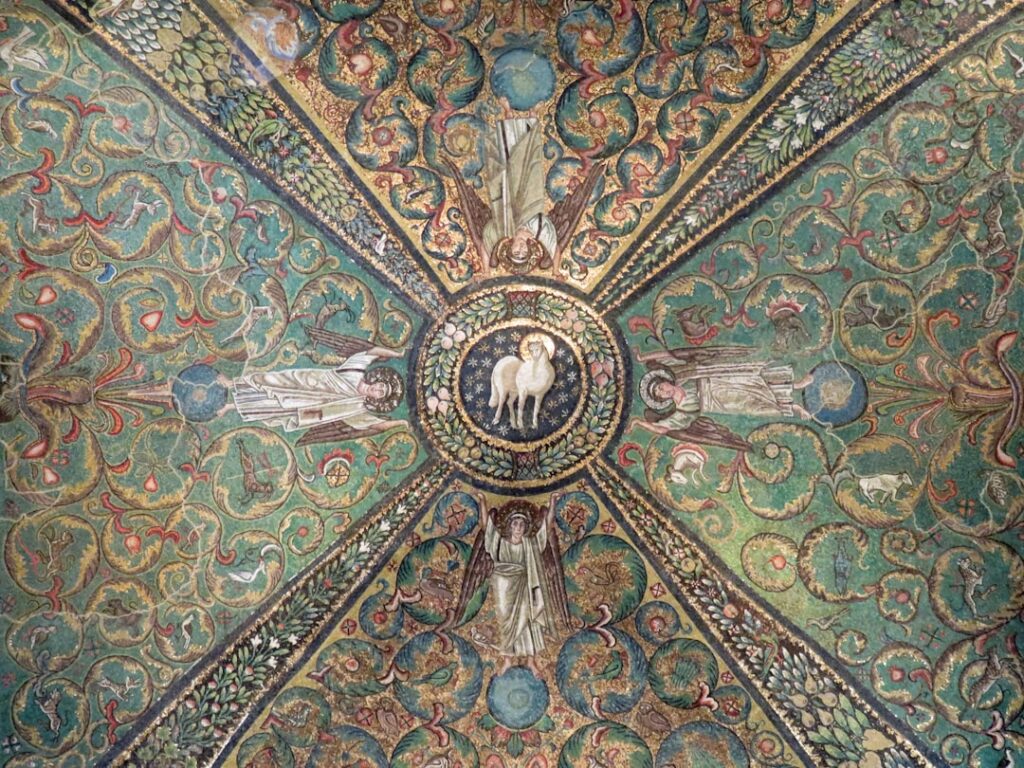
Immersive description: the Mausoleo di Galla Placidia is a small cruciform building — modest in size but extraordinary for the richness of its interior mosaics. Often described as a jewel box for mosaic art, it’s famous for its star-strewn ceiling — a field of blue and gold tesserae forming a night sky dotted with Christian symbols (the lamb, crosses, vegetal motifs). Unlike the large imperial panels at San Vitale, the scale here is intimate: the mosaics wrap around you. The effect is almost meditative; footsteps echo softly and the filtered light makes the gold shimmer.
Local tips: the visit is short but intense, so allow 20–30 minutes for a careful reading. The space is very tight and access is often controlled — wait your turn and leave large bags or suitcases behind. Mosaics are fragile; strictly observe conservation rules (no touching). For photos, a low-angle shot toward the ceiling captures the starry effect; again, no flash. Since the mausoleum is adjacent to San Vitale, seeing them both offers a contrasting pair — the grand monumental program versus an intimate jewel box — which reveals the variety of Byzantine expression in Ravenna.
Basilica di Sant’Apollinare Nuovo and the Emperors’ Visual Narrative
Address: Basilica di Sant’Apollinare Nuovo, Via di Roma, 52, 48121 Ravenna RA, Italy.
Opening hours: generally 08:30–17:30; extended hours in summer. Occasional closures for religious services. Check times at the ticket office.
Price: about €4.00 for entry alone. Frequently included in the « Ravenna Musei » combined ticket. Reduced rates may apply.
Immersive description: built by the Ostrogothic king Theodoric in the early 6th century and later re-consecrated under Byzantine influence, Basilica di Sant’Apollinare Nuovo gives a fascinating visual account of political and religious shifts. Long lateral friezes tell the story of processions of saints, martyrs and clerical figures, and also include imperial portraits and hagiographic scenes that echo and adapt imperial messaging. You can see layers of iconographic programs — Gothic remnants alongside Byzantine interventions — that testify to changing power and liturgy.
Local tips: walk slowly down the central nave to read the narrative sequence — the side mosaics work like an ancient comic strip. The colors are striking: deep blues, greens, golds and purples. Bring compact binoculars if you want to see details without blocking other visitors. Outside, the plain façade contrasts with the lavish interior — take a moment to compare the overall effect. Late afternoon light can bring out the gilded relief; it’s an excellent time for flash-free photography.
Battistero Neoniano, Museo Arcivescovile and the Duomo Complex
Addresses:
- Battistero Neoniano (Battistero degli Ortodossi): Piazza Duomo, 1, 48121 Ravenna RA, Italy.
- Museo Arcivescovile e Cappella di Sant’Andrea: Piazza Duomo, 1 (Duomo complex), 48121 Ravenna RA, Italy.
- Cattedrale di Ravenna (Duomo): Piazza Duomo, 1, 48121 Ravenna RA, Italy.
Opening hours: the baptistery and museum are generally open 09:00–17:00; the Duomo often keeps similar hours but may open earlier for mass. Hours can change during special celebrations and public holidays. Check the program before you go.
Price: Battistero Neoniano around €3.00; Museo Arcivescovile about €3.00–€4.00; access to the Duomo itself may be free but certain sections (museum, chapel) could require a ticket. The « Ravenna Musei » combined ticket often covers several of these sites at a good price (≈ €13–15 for multiple locations); ask at the tourist information point.
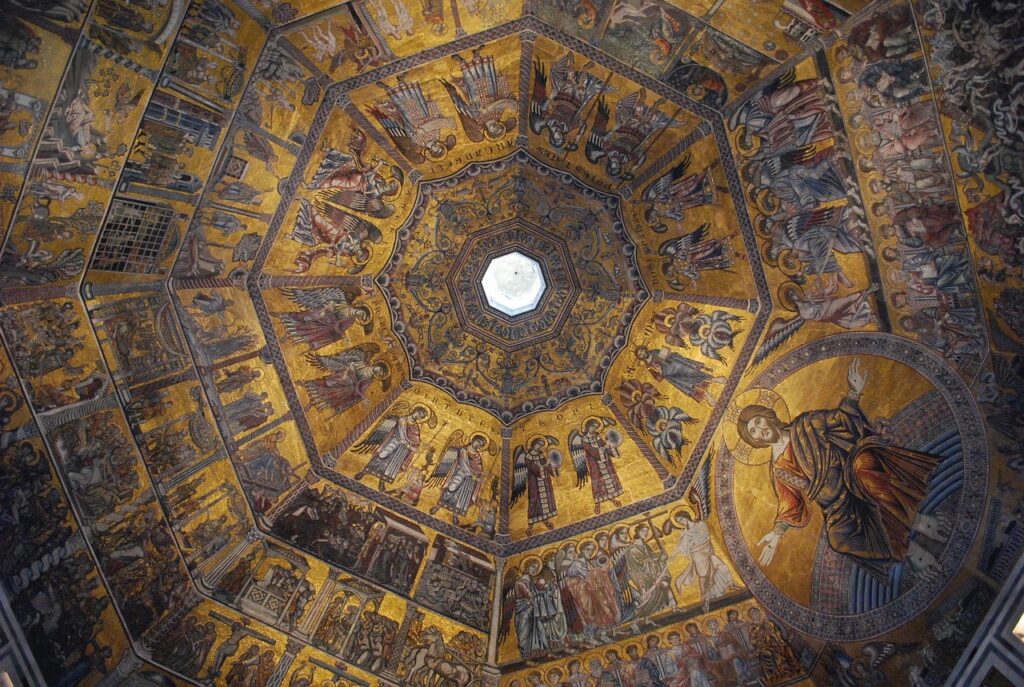
Immersive description: the Battistero Neoniano, with its dome entirely covered in mosaics depicting Christ and the heavens, gives a symbolic baptismal experience: the central mosaic shows Christ surrounded by the River Jordan, angels and the transfiguration. The Museo Arcivescovile (archiepiscopal museum) preserves fragments, icons and liturgical objects, and its Chapel of St. Andrew (Cappella di Sant’Andrea) features mosaics that complement the city’s iconographic program. Together, the Duomo complex forms a chronological and spatial core where liturgy, art and imperial representation converge in Ravenna.
Local tips: group these sites into one visit — they’re all close around Piazza Duomo. The baptistery is especially photogenic: to capture the dome mosaic, use a wide-angle lens and stabilize your camera. At the Museo Arcivescovile, take time to read the labels in English and Italian — they often explain iconography and links to imperial patrons. If you’re into conservation, ask about temporary exhibits on mosaic restoration techniques — they’re often very informative.
Sant’Apollinare in Classe and the Mausoleo di Teodorico — Outskirts but Essential
Addresses:
- Basilica di Sant’Apollinare in Classe: Via Romea Sud, 224, 48125 Classe RA, Ravenna, Italy.
- Mausoleo di Teodorico (Tomb of Theodoric): Via delle Industrie, 7, 48122 Ravenna RA, Italy.
Opening hours: Sant’Apollinare in Classe: generally 10:00–17:00 (seasonal hours). Mausoleo di Teodorico: variable hours, often 09:30–16:30. Hours may change; check with tourist offices or local information boards before you leave.
Price: Sant’Apollinare in Classe about €6.00 (reflecting its importance and scale); Mausoleo di Teodorico around €4.00. Reduced rates available; combined tickets may include these sites.
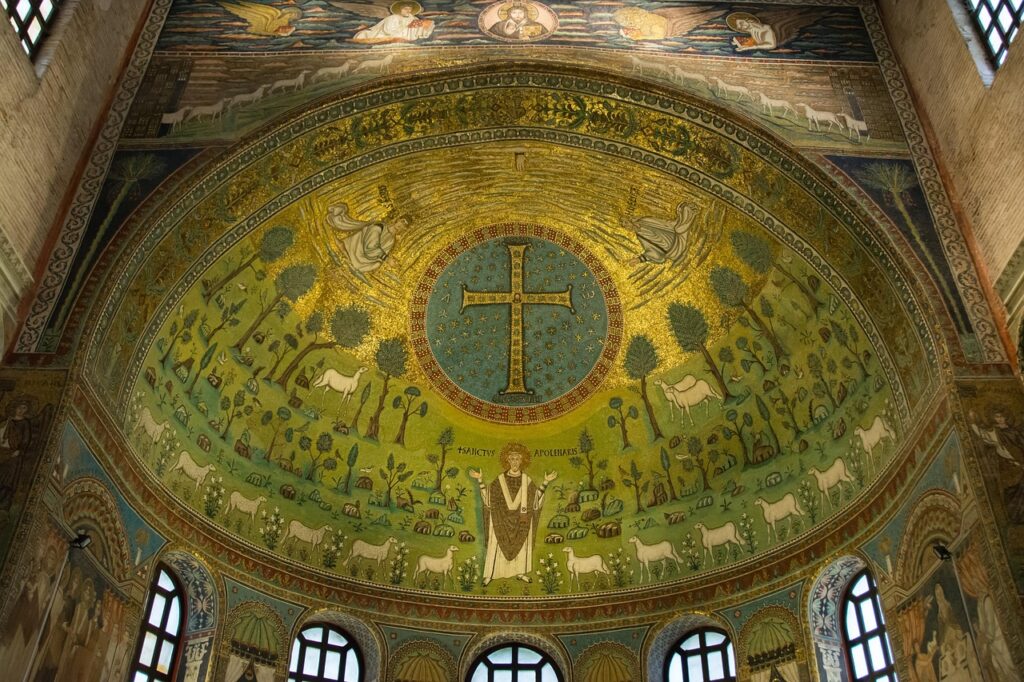
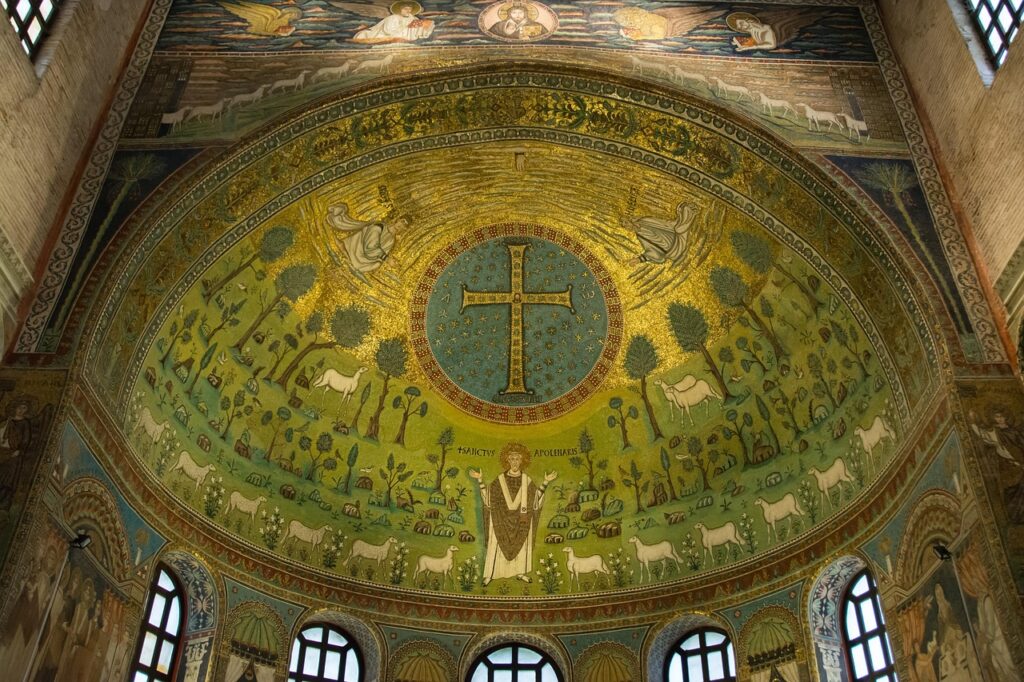
Immersive description: a few kilometers from the historic center, Sant’Apollinare in Classe is famed for its expansive iconography and its grand apse dominated by a majestic mosaic of Christ in Majesty surrounded by angels and a serene pastoral scene. Originally built to serve the ancient commercial port of Classe, the site reveals the region’s liturgical and economic significance beyond the city’s bustle. The atmosphere is quieter and more spacious — a place for contemplative pause.
The Mausoleo di Teodorico offers an interesting contrast: built for the Ostrogoth king Theodoric (died 526), it reflects a different historical moment in which Gothic power expressed itself through austere, solid architecture. The monolithic stone tomb evokes the transition between so-called « barbarian » traditions and Roman heritage, and its lack of rich mosaic decoration places it in a more restrained aesthetic. Together, these two sites show the plurality of responses to power and remembrance in post-Roman Italy.
Local tips: for Sant’Apollinare in Classe, plan transport (local bus or bike) and allow 1–2 hours to see the site and its small attached museum. Bring water in summer and enjoy the outdoor setting for a break. The Mausoleo di Teodorico is a short visit; pair it with other peripheral monuments. Check bus connections (urban lines serve Classe and outlying sites); buying bus tickets in advance (at tobacco shops, kiosks or via a local app) will simplify logistics.
Tickets, Suggested Routes and Practical Advice
Combined tickets and fares: Ravenna regularly offers combined passes under the name « Ravenna Musei » (or similar) that bundle admission to several mosaic sites (San Vitale, Mausoleo di Galla Placidia, Sant’Apollinare Nuovo, Battistero Neoniano, Museo Arcivescovile, sometimes Sant’Apollinare in Classe). Combined fares usually hover around €13.00–€15.00 and may be valid for several days (2–7 days depending on the option), which is handy if you want to spread visits out. Check at the tourist info desk (info point on Piazza del Popolo) or the official monument websites to buy in advance and avoid lines.
Recommended routes:
- Morning: start at Basilica di San Vitale (Piazza San Vitale, 2) to catch the morning light, then visit the Mausoleo di Galla Placidia (Via San Vitale, 17) right next door.
- Midday: head to Piazza Duomo for the Battistero Neoniano and the Museo Arcivescovile (Piazza Duomo, 1) and enjoy a light lunch in the area (see dining tips below).
- Afternoon: explore Basilica di Sant’Apollinare Nuovo (Via di Roma, 52). Finish the day with a stroll to the Mausoleo di Teodorico or, if time allows, catch a bus to Sant’Apollinare in Classe (Via Romea Sud, 224) for a quieter, more rural experience.
General tips:
- Timing: favor opening hours (9:00–11:00) or late afternoon (16:00–18:00) to avoid the busiest period (12:00–15:00).
- Photography: flash is banned in most sites; use a fast lens and moderate ISO. Respect preservation rules (don’t touch mosaics).
- Behavior: some sites are still active places of worship — respect service times and keep silence inside churches.
- Accessibility: some historic monuments have access constraints (steps, narrow spaces). Check ahead if you have specific mobility needs.
Where to Eat and Rest — Local Picks Around the Mosaics
After hours of admiring mosaics you’ll want to sample local food. Here are a few recommended places close to the main sites:
- Trattoria al Cerchio, Via Dante Alighieri, 10, 48121 Ravenna RA — Traditional Romagna cuisine (piadina, tagliatelle), main dishes typically €12–€25. Hours: 12:00–14:30 and 19:00–22:30. Reservations recommended for dinner.
- Osteria del Tempo Perso, Via IV Novembre, 5, 48121 Ravenna RA — Wine bar with local dishes, starters €6–€12, mains €10–€20. Hours: 12:30–15:00 and 19:00–23:00.
- Caffè Letterario, Piazza San Francesco, 3, 48121 Ravenna RA — Coffee breaks, pastries and aperitifs, drinks €2–€8. Hours: 08:00–20:00.
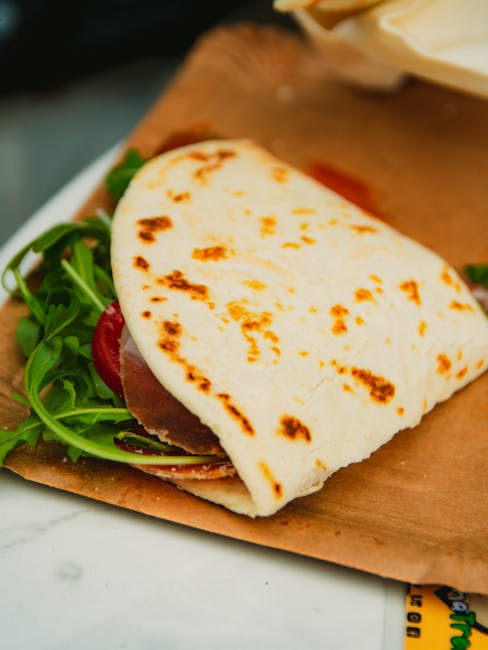
Tips: try the piadina (a Romagna flatbread) with local fillings — perfect for a quick stop between monuments. Local markets also offer fresh produce: the city market (often on Piazza del Popolo, check the schedule) is great for cheeses, cured meats and fruit.
Conclusion: Reading Empire in Glass and Gold
The mosaics of Ravenna do more than dazzle — they tell a layered story where the sacred and the political intertwine. Walking through Basilica di San Vitale, Mausoleo di Galla Placidia, Sant’Apollinare Nuovo, the Battistero Neoniano, the Museo Arcivescovile, Sant’Apollinare in Classe and the Mausoleo di Teodorico, you’ll move through chapters of European history: Byzantine assertion, Gothic survival, liturgical transformation and the persistence of imperial memory. Every tessera, every flash of gold carries intent: to assert, sanctify, and legitimize. Understanding those intentions requires alternating close looking with overall perspective, considering both iconography and the patrons who commissioned it.
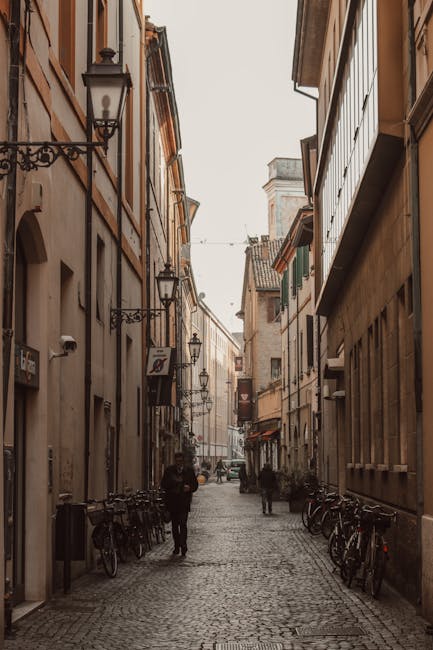
To get the most from your visit, plan ahead: buy a combined ticket if you want to spread visits over several days, favor off-peak hours for quiet observation, follow conservation rules and don’t underestimate the value of long pauses that let the images’ meaning sink in. Leave time to wander the surrounding neighborhoods: Ravenna is more than an open-air museum — it’s a living city where food, alleys and the nearby coastline add layers to the artistic experience.
Whether you’re passionate about history, sacred art or simply curious for a singular visual experience, Ravenna offers an exceptional route where emperors and saints still speak through glass, stone and gold. Return at different times of day; shift your viewpoint; read the mosaics patiently. You’ll discover these images were designed to last centuries and to convey a surprisingly modern visual language: power translated into image, heaven made tangible by human craft. Enjoy your journey into Ravenna’s mosaics and emperors.