




Introduction
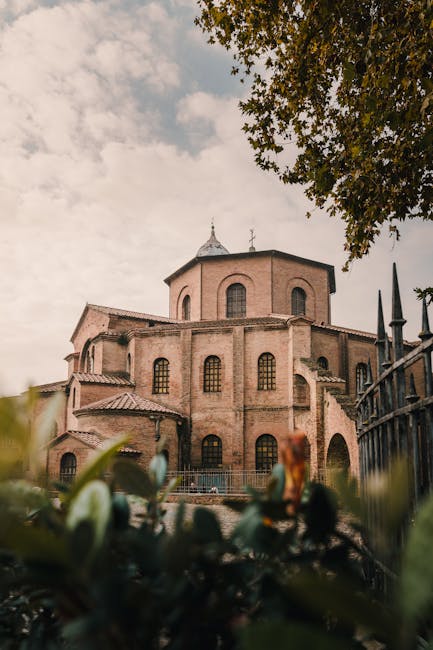
Ravenna, a crossroads city of late Antiquity and the early Middle Ages, is today an open-air museum where light brings centuries of history to life in every mosaic. Among its treasures, the “Baptistery of the Two Traditions” holds a special place: it represents both the confrontation and the complementarity between two distinct baptisteries — the Battistero Neoniano (or Battistero degli Ortodossi) and the Battistero degli Ariani — which, through art and architecture, tell the story of the religious and cultural complexity of a time when Ravenna was the capital of kingdoms and the seat of powerful bishops. These two buildings, close to one another, reflect not only different theological styles — one tied to the Nicene (orthodox) tradition and the other to Arianism — but also two artistic approaches to figuration, symbolism, and sacred space.
This article, aimed both at history-loving travelers and curious passersby, will take you across the centuries to examine these sites in detail: full addresses, current prices in euros, typical opening hours, immersive descriptions of the mosaics, and practical tips to make the most of your visit. You’ll learn how morning light falls across the pavement, how sound changes inside an octagonal baptismal font, and why two baptisteries standing a few steps apart are a strong indicator of the religious tensions — and civil coexistence — that marked Ravenna in the 5th–6th centuries.
This guide doesn’t stop at facts: it proposes a sensory stroll. Imagine touching the polished stone, tilting your head to read a Christ Pantocrator in gold tesserae, or listening to a local guide explain the iconography of baptism by immersion. We’ll also give practical recommendations — best times to avoid crowds, walking routes to nearby Byzantine monuments (Basilica San Vitale, Mausoleum of Galla Placidia, Basilica of Sant’Apollinare Nuovo), and tips for photographing without spoiling the atmosphere. Finally, because travel also means eating and sleeping well, you’ll find local suggestions to extend your history-filled day with a coffee break or a wander through Ravenna’s narrow streets.
The Battistero Neoniano (Battistero degli Ortodossi): address, history and artistic details
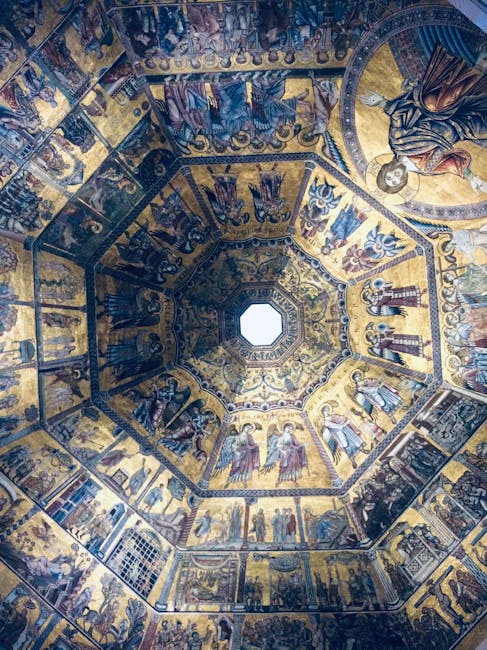
Full address: Battistero Neoniano (Battistero degli Ortodossi), Piazza del Duomo 6, 48121 Ravenna RA, Italy. This baptistery sits within the Duomo complex, just a short walk from the Cattedrale di Ravenna (Duomo di Ravenna) and the Archiepiscopal Museum. Built at the end of the 4th century and decorated in the 5th century, it exemplifies the Roman continuity that transitioned into Byzantine art. Its characteristic octagonal shape evokes ancient Christian symbolism — the eighth day as the day of resurrection — and the central dome is one of Ravenna’s most photogenic spaces.
Opening hours (indicative, check on site): generally open daily from 9:00 to 18:00 in high season (April–October); 9:00 to 17:00 in low season (November–March). Closures possible on public holidays or for liturgical events. Admission: single entry approximately €3.00 (reduced €2.00 for students and seniors). Note: these fees can be included in combination tickets (Ravenna Card or Duomo / Archiepiscopal Museum combined tickets); plan on €8–€12 for a combined route covering several monuments.
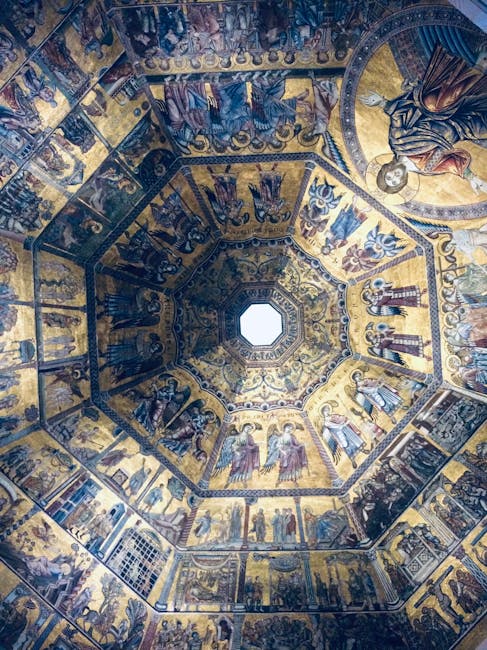
Immersive description: when you step inside you first notice the coolness of the stone, then the light filtering and dancing on the dome’s golden tesserae. At the center of the dome, the mosaic of Christ’s baptism by John the Baptist is the focal image: a youthful Christ standing in the Jordan while the Holy Spirit descends as a dove. The color palette — deep golds, intense blues and ancient greens — creates an atmosphere both majestic and intimate. Scenes around the narrative register depict processions of the baptized accompanied by saints and angels, arranged with a symmetry that leads the eye upward.
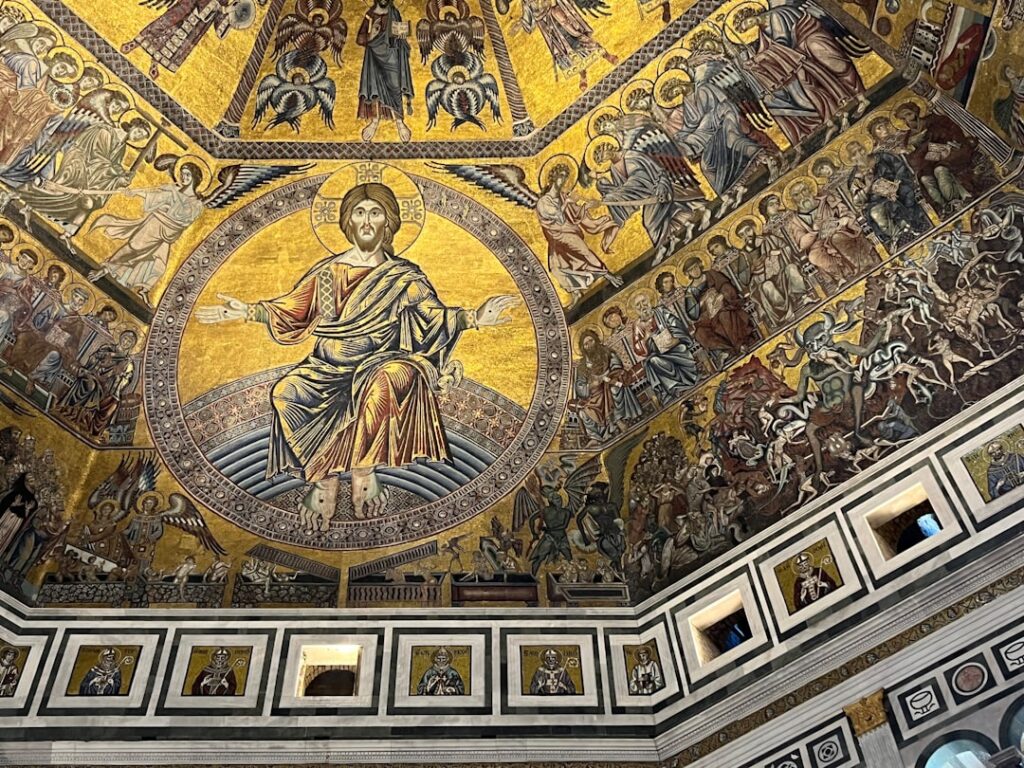
Practical tips: to photograph without flash (flash is often prohibited), arrive early at opening time or late in the afternoon to enjoy soft light. The Duomo’s audio guides frequently give precise explanations; consider buying a combined ticket at the Archiepiscopal Museum ticket office to save money. If you’re sensitive to noise, pick a weekday visit: school groups often tour in the mornings during high season. Finally, respect the rules of silence and no-flash to help preserve the fragile mosaics.
The Battistero degli Ariani: address, historical context and iconography
Full address: Battistero degli Ariani, Via di Roma 51, 48121 Ravenna RA, Italy (situated very close to the Basilica of Sant’Apollinare Nuovo). The baptistery was founded by the Ostrogothic kings in the 6th century, when Ravenna was a political capital. Arianism, a Christian doctrine distinct from Nicene faith, had its own liturgy and artistic commissions. The Arian baptistery bears witness to that doctrinal uniqueness while borrowing Byzantine artistic language: mosaic techniques, baptism iconography and hieratic figures, but with stylistic nuances revealing a Gothic court’s influence.
Opening hours (indicative): usually open from 9:00 to 18:00 in high season, 9:00 to 17:00 in low season. Sometimes closed Monday mornings for maintenance. Admission: individual fee €3.00 (reduced €2.00). Combined tickets are often available with entrance to the Basilica of Sant’Apollinare Nuovo; combined prices around €7.00–€10.00. Check the benefits of the Ravenna Card, which includes access to multiple sites.
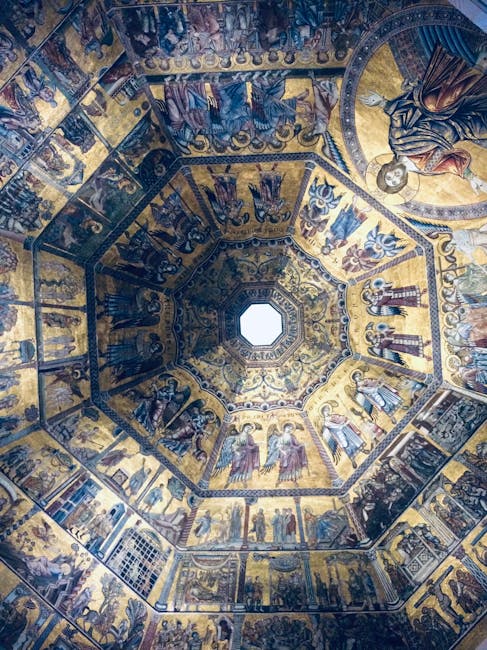
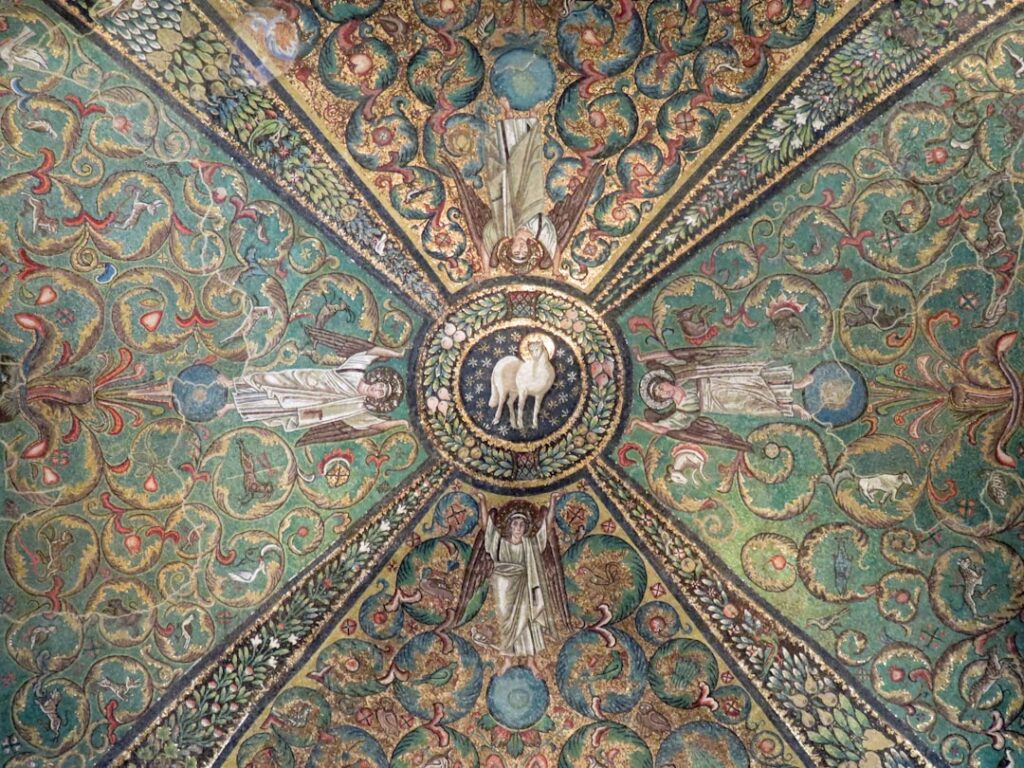
Immersive description: the octagonal dome presents a powerful central scene: the baptism of Christ, framed by angelic figures and onlookers. The most noticeable differences between the two baptisteries are not always theological to an untrained eye, but lie in stylistic details — the way drapery is handled, the characters’ physiognomy, and above all how light is used to dramatize certain scenes. Here, the dome’s geometry, decorative registers and paved floor create a sacred theater where the water of baptism also symbolizes social and political integration.
Practical tips: the baptistery’s proximity to the Basilica of Sant’Apollinare Nuovo makes combining visits on foot easy; allow at least 45 minutes for the baptistery and about an hour for the basilica. Local audio guides or printed leaflets at the entrance explain the iconographic specifics (for example, the arrangement of figures and the meaning of gestures). If you visit in summer, bring a water bottle and a hat for walks between monuments.
How to link these two monuments into Ravenna’s heritage circuit: routes, combined tickets and best practices
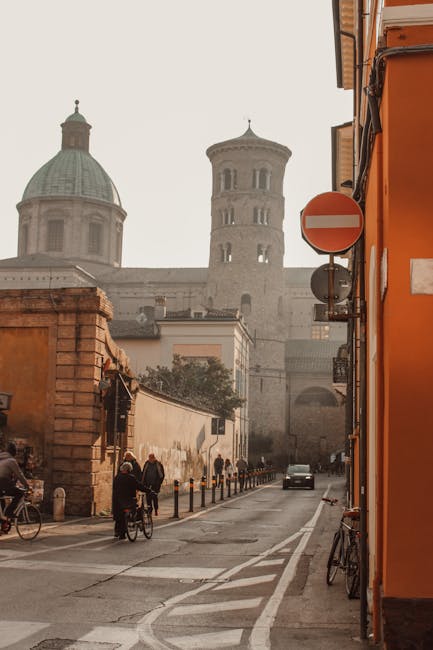
Ravenna is compact: its greatest Byzantine treasures are walkable from the historic center. The two baptisteries fit naturally into a route that includes the Basilica of San Vitale (Via Argentario 22, 48121 Ravenna RA), the Mausoleum of Galla Placidia (Via San Vitale 85, 48121 Ravenna RA), the Basilica of Sant’Apollinare Nuovo (Via di Roma 2), and the Battistero Neoniano near the Duomo (Piazza del Duomo 6). For a full day, plan a one-way circuit: start with San Vitale and the Mausoleum of Galla Placidia in the morning (when interior light is most favorable), continue to the baptisteries around midday, and finish at Sant’Apollinare Nuovo.
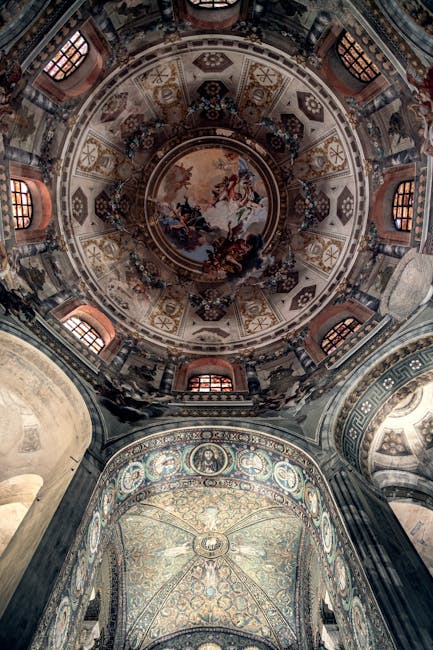
Prices and combinations: many sites accept combined tickets. A common combo (indicative prices) is: Basilica of San Vitale + Mausoleum of Galla Placidia + Battistero Neoniano + Battistero degli Ariani = combined ticket roughly €10.00–€14.00. The Ravenna Card (tourist pass) often grants access to multiple monuments over 2–3 days for a fixed price (around €15.00–€20.00 depending on season and promotions). These figures are indicative; check prices at the local tourist information office (Ufficio Informazioni Turistiche di Ravenna), usually located at Piazza del Popolo or near the portico in the historic center.
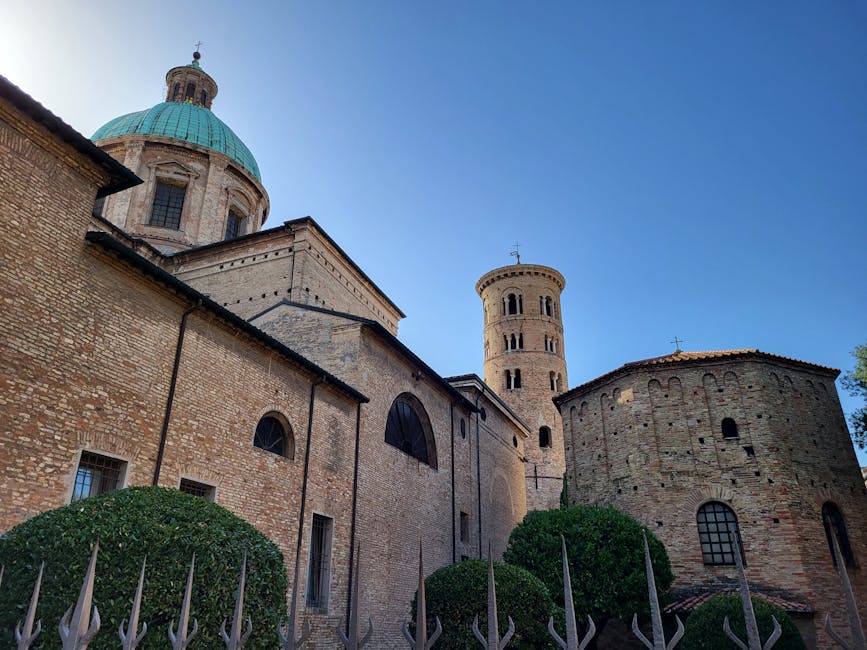
Route tips: start early to avoid groups, especially in high season. Peak hours between 11:00 and 15:00 see the largest crowds; lunchtime can be a good window to visit a museum or a less crowded site. Buy combined tickets at the main ticket offices (San Vitale or the Archiepiscopal Museum) to save time. Wear comfortable shoes: floors are often mosaic or ancient stone and can be uneven. Finally, respect conservation rules (no flash, no touching walls) and keep your voice low in sacred spaces.
Local practical tips: transport, eating, lodging and photography advice
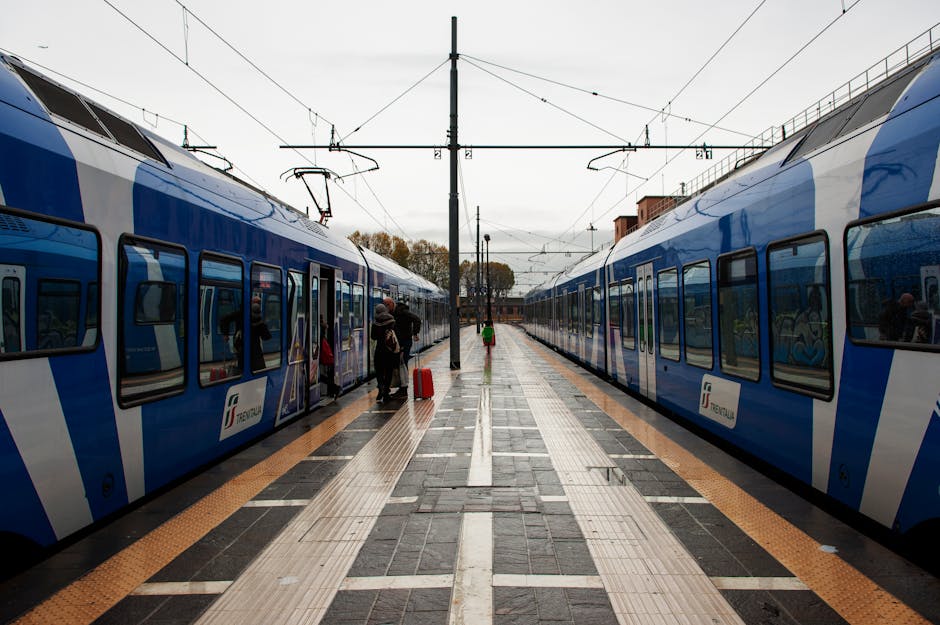
Getting to Ravenna: the city is reachable by train from Bologna (about 1h15–1h30), Rimini, and other Adriatic coast towns. The main station is Ravenna Station (Piazzale Orto dei Pecci, 48121 Ravenna RA). From the station, the historic center is a 15–20 minute walk; taxis and city buses (ATV Ravenna) serve the main tourist points. If you arrive by car, park in peripheral public lots (Stadio Parking or Parcheggio via Zalaffi) and walk into the center: the ZTL (limited traffic zone) protects the historic core.
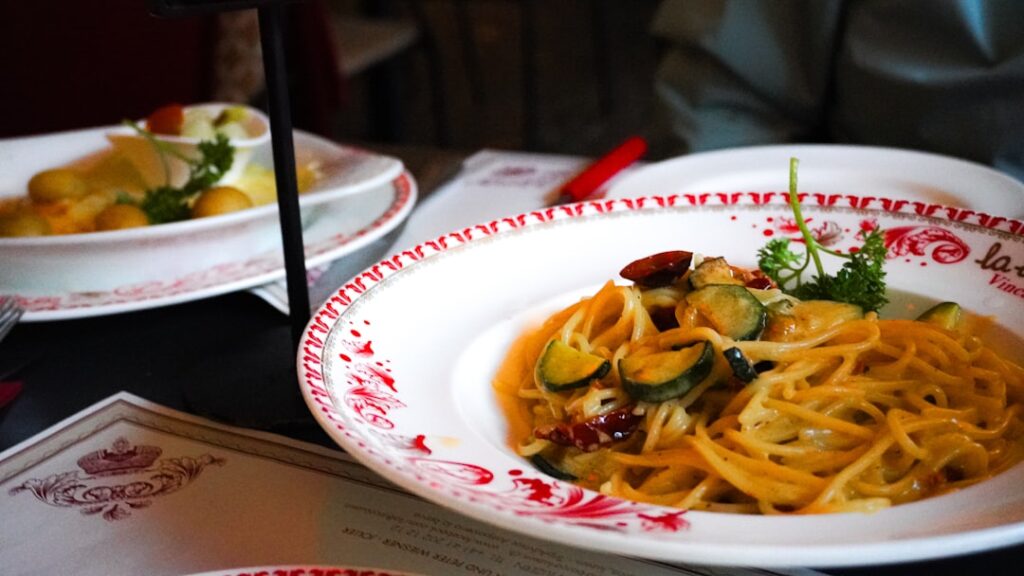
Eating and breaks: for a tasty break between visits, try the local specialties offered by osterie and trattorie near the Duomo and Piazza del Popolo. Typical recommendations (generic addresses as small eateries change often): Osteria del Tempo Perso (near Via Cavour), Trattoria al Cerme (streets around Piazza del Popolo). Meal prices: €12–€25 per person for a main course, a drink and possibly a dessert. For a quick espresso, center bars charge about €1.20–€1.80 at the counter.
Accommodation: Ravenna offers historic hotels, B&Bs and apartments. To be at the heart of the monuments, look for places around Piazza del Popolo or Via Cavour (for example, 3-star hotels around €70–€120 per night in low season, higher in high season). Cheaper options (hostels, B&Bs) range around €40–€80 per night depending on the period.
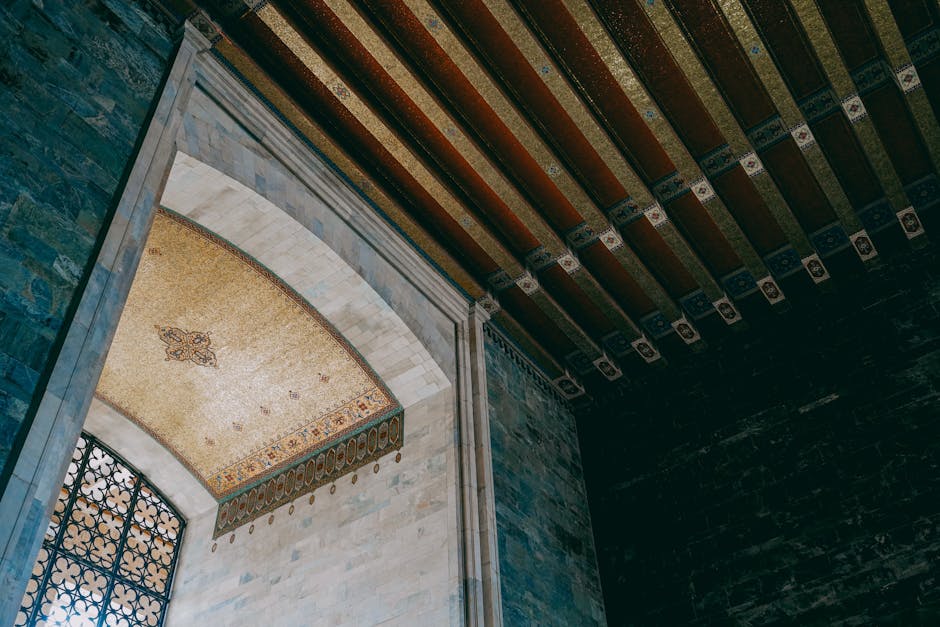
Photography and heritage respect: technical tips — use a wide-angle lens to capture an entire dome (10–24mm on full frame, or equivalent), favor low ISO to minimize noise and stabilize your camera (tripods may be prohibited in some sites: check on arrival). Don’t use flash indoors: it damages mosaics and is often forbidden. For exterior shots, morning and late afternoon give warm light; indoors, work with available light and make the most of natural illumination.
Contact information and useful resources
- Ufficio Informazioni Turistiche di Ravenna — Approximate address: Piazza del Popolo 1, 48121 Ravenna RA. Phone: +39 0544 48222 (check online before departure).
- Basilica di San Vitale — Via Argentario 22, 48121 Ravenna RA. Hours and prices posted on site.
- Mausoleum of Galla Placidia — Via San Vitale 85, 48121 Ravenna RA. Access often regulated with timed entry in high season.
- Basilica of Sant’Apollinare Nuovo — Via di Roma 2, 48121 Ravenna RA. Near the Battistero degli Ariani.
Conclusion
The Baptistery of the Two Traditions in Ravenna — embodied by the Battistero Neoniano and the Battistero degli Ariani — is more than a set of monuments: it’s tangible evidence of the religious, political and artistic confrontation and coexistence of late Antiquity. Each dome, every golden tessera, carries a story where theology, royal prestige and artisanal skill intertwine. For the modern visitor, these sites offer a sensory immersion: the sparkle of mosaics, the coolness of stone, the quietude that invites contemplation. Moving from one baptistery to the other, you travel not only across Ravenna’s physical space but through the time and ideas that shaped Christian Europe.
Visiting these baptisteries armed with practical information — full addresses (Battistero Neoniano, Piazza del Duomo 6; Battistero degli Ariani, Via di Roma 51), usual opening hours, and indicative prices in euros — helps you optimize your stay and better understand the urban context: Ravenna reads like an open-air museum where each monument is a page in a larger historical book. Don’t forget essential tips: favor early-morning visits, combine tickets to save, respect conservation rules and use audio guides or local guides to deepen your understanding of the iconography.
Finally, beyond practicalities, allow yourself to be carried by aesthetic emotion — take time to study an angel’s face, admire the craftsmanship of a draped fold, or simply stand still under a dome for a few minutes. These simple gestures will turn your visit into a memorable and respectful experience of the heritage. Ravenna is not just to be seen; it must be felt. On your way out, stroll the lanes, taste a local specialty and let the mosaic images linger in your memory. Safe travels and enjoy discovering the Baptistery of the Two Traditions.