





Introduction: A day to dive into Ravenna’s Byzantine soul
Ravenna, the Romagna gateway to the Adriatic Sea, is a city where time seems to have frozen in the glow of mosaics. In a single day you can travel across centuries by following the golden reflections of tesserae that cover domes and walls in an age-old light. The outing I suggest here focuses on a distinctive, complementary experience: a close-up visit to the city’s two major baptisteries — the Battistero Neoniano (often called the Battistero degli Ortodossi) and the Battistero degli Ariani. These two buildings, close to each other both geographically and stylistically, embody different strands of early Christian thought and each offers, in its own way, a display of sacred art and symbolism.
In late antiquity, baptism was not only a religious sacrament; it was a theological performance made visible through architecture and decoration. In Ravenna, the baptistery form — a centralized plan, a dome, narrative mosaics — becomes the stage for a dialogue between doctrines. Here you’ll be able to take in two artistic and theological approaches: one tied to Nicene tradition, the other associated with Arian beliefs that, at one time, gained traction among the barbarian federates in Rome. Seeing these differences directly in the mosaics turns the visit into an intellectual and sensory immersion.
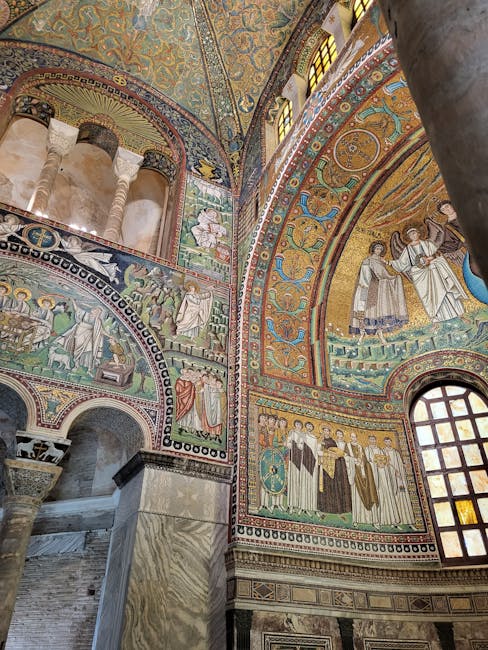
But this day isn’t just an art history lesson; it’s a walk to be felt. The translucent walls of the baptisteries, the light that filters through, the liturgical gestures suggested by the scenes, and the play of shadow and color invite you to slow down. You’ll learn to read a mosaic: spotting the hierarchy of figures, understanding the role of aquatic symbolism, deciphering Greek or Latin inscriptions when they survive. You’ll also witness how monument and city meet — how these sacred places sit within Ravenna’s urban fabric, just a stone’s throw from the Basilica of San Vitale, the Mausoleum of Galla Placidia and Piazza del Popolo.
This guide offers a clear route, precise practical information (exact addresses, opening hours, prices in euros), vivid descriptions for each space, and local tips — from the best time for photos to where to grab lunch in nearby alleyways. Whether you’re into archaeology, an amateur photographer, a cultural pilgrim, or a curious traveler, this one-day escape to the “Baptistery of Two Confessions” will help you experience Ravenna differently: not as a string of isolated monuments, but as a coherent, deeply moving experience.
History and meaning: Battistero Neoniano and Battistero degli Ariani
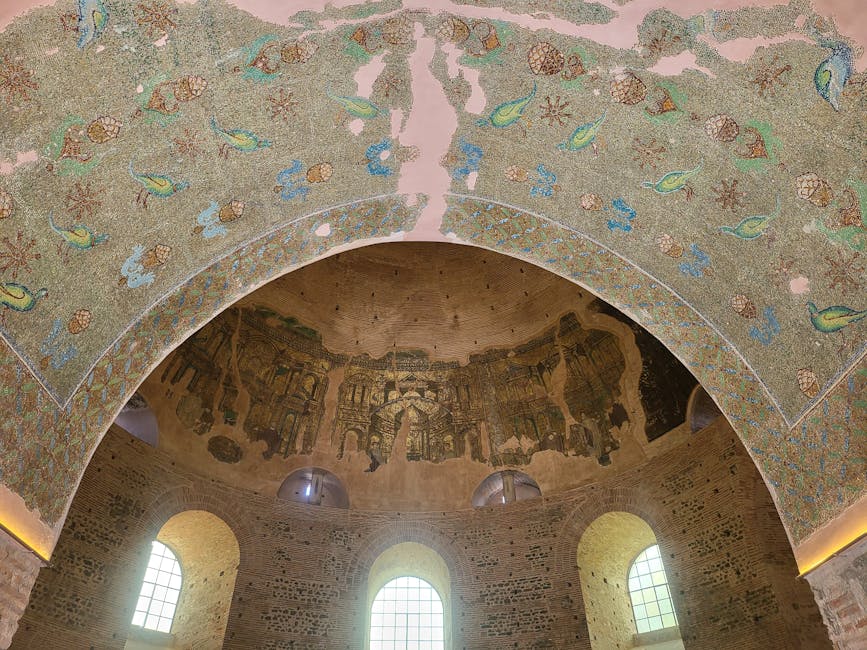
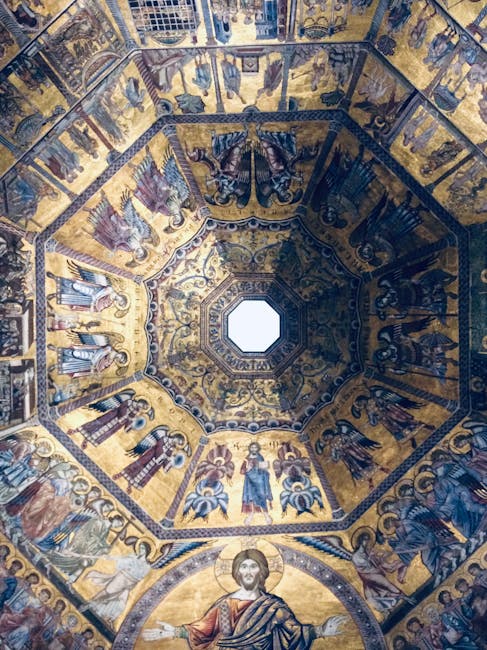
The Battistero Neoniano, often called the Battistero degli Ortodossi, is one of Ravenna’s oldest Christian monuments. Dating from the 4th–5th centuries, it is traditionally associated with Bishop Neon (from whom it takes its name), who had the space prepared for catechumens. The building has a characteristic octagonal plan, with a dome lavishly decorated with mosaics depicting the Baptism of Christ by John the Baptist. The iconographic composition is clear: Christ is shown standing, immersed in water, surrounded by angels and a host of saints and heavenly attendants, all framed by geometric patterns and vegetal garlands. These images aimed to make visible the reconciliation of heaven and earth, the passage from sin to grace.
The Battistero degli Ariani, built somewhat later, belongs to a different religious reality: Arianism. This confession, which denied the consubstantiality of the Son with the Father, saw notable development in Ravenna during the reign of the Ostrogothic kings. The Arian baptistery, while adopting the centralized plan and a domed mosaic, shows distinct iconographic nuances — the representation of Christ, the presence of symbolic elements tied to Arian theology, and hagiographic figures adapted to that belief system. Artistically, the Arian baptistery’s mosaics stand out for their flowing lines, slightly different color palette, and for later reuses or interventions that tell the complex story of the local religious history.
So both baptisteries are as much works of art as witnesses to a turbulent moment in late antique Europe: the shift from the Roman Empire to Germanic kingdoms, the coexistence and sometimes clash of Christian doctrines, and the way art served as a language. Visiting these monuments side by side is like taking an open-air lesson in religious and artistic history. At every mosaic you’ll see how theology shapes form and how form affects the reception of the sacrament.
Practical, immersive visit: addresses, opening hours, prices and what to expect on site
To plan your day, here are the exact practical details (always double-check for updates on site):
- Battistero Neoniano (Battistero degli Ortodossi) — Address: Piazza del Duomo 1, 48121 Ravenna RA, Italy. Opening hours: generally open 9:00–18:00 from April to October, and 9:00–17:00 from November to March. Admission: around €4.00 for individual entry. Hours may vary on religious holidays.
- Battistero degli Ariani (Arian Baptistery) — Address: Via degli Ariani 1, 48121 Ravenna RA, Italy. Opening hours: usually 9:00–18:00 (April–October) and 9:00–17:00 (November–March). Admission: about €4.00 for individual entry. Some Saturdays or public holidays may have partial closures.
- Combined tickets: there are combined tickets for Ravenna’s Byzantine monuments (sometimes called the “Ravenna Pass” or “musei pass”) giving access to the Basilica of San Vitale, the Mausoleum of Galla Placidia and several baptisteries for a fee of roughly €9.00–€12.00, valid for a day or longer depending on the option. These economical tickets are worth it if you plan to visit multiple sites.
Tips for an immersive visit:
- Arrive early in the morning (or late afternoon) to avoid crowds and capture the slanting light on the mosaics. The best light for photographing the tesserae is often between 9:30 and 11:30.
- Photography: in most baptisteries, non-flash photography is allowed; flash is forbidden to preserve the mosaics. Bring a wide-angle lens and a lightweight tripod if local rules permit one.
- Time needed: allow 45–60 minutes per baptistery if you want to read the info panels and take your time.
- Accessibility: entry is generally accessible, but some areas may have steps. Check about elevators or ramps if you have specific mobility needs.
- Audio guides and guided tours: audio guides or guided tours in English are sometimes available via Ravenna’s tourist information office (Ufficio Informazioni e Accoglienza Turistica), located near the historic center.
One-day itinerary: how to link sites and experience Ravenna
Morning — Start at the Battistero Neoniano (Piazza del Duomo 1). Arrive at opening time to enjoy a quiet moment. After your visit, cross the short distance to the Cathedral of Ravenna (Duomo di Ravenna, Piazza Duomo) and the Archiepiscopal Museum (Museo Arcivescovile di Ravenna, Piazza Duomo 5), where you can deepen your understanding of the mosaics’ context and see archaeological and liturgical objects. The museum often offers explanations about the evolution of baptismal rites and remnants of lost decorations.
Midday — Have lunch at a local trattoria in the nearby streets, for example around Via Cavour. Choose traditional Romagna dishes: piadina romagnola (around €4–6), lasagne alla bolognese or a local fish dish. For a coffee break, Piazza del Popolo is a pleasant square to watch local life while enjoying a treat.
Afternoon — Head to the Battistero degli Ariani (Via degli Ariani 1). The short distance between the two baptisteries makes this an ideal chance to compare their iconography in situ. Then walk to the Basilica of San Vitale (Piazza San Vitale 5, usually open 9:00–19:00; admission around €7–10) and the Mausoleum of Galla Placidia (via San Vitale 17; entrance often included with the basilica ticket or charged separately at about €4–6). These stops will round out your visual reading of the mosaics and help you understand stylistic continuity.
End of day — Finish with a stroll along Via Cavour or Via di Roma and a pause on Piazza del Popolo for an aperitivo. If you still have energy, watching the sunset over Ravenna’s outskirts and canals offers soft colors that echo the mosaics’ golden tones.
Local tips, good addresses and practical recommendations
Getting around: Ravenna is best visited on foot; the historic center is compact. If you arrive by train, Ravenna Station is about a 10–15 minute walk from the center. Local bus lines also serve the main sites if you prefer to avoid walking.
Where to eat: for a typical lunch try Piadineria il Ritrovo (approximate address: Via Cavour 12, open 11:00–22:00, piadine from around €4.00). For a more polished dinner, Trattoria al Cerreto (Via Corrado Ricci 5, reservations recommended on weekend evenings) serves fish and regional pasta dishes priced roughly €12–20 per main. For coffee and pastries, Caffè degli Artisti (Piazza del Popolo) is a nice spot.
Behavior and respect: inside the baptisteries, keep noise to a minimum and dress modestly — these are sacred spaces. Avoid loud groups and do not touch decorated surfaces. If you attend a mass or ceremony, observe local customs.
Safety and health: Ravenna is generally very safe, but as everywhere, keep an eye on your belongings in tourist areas. In summer bring water — temperatures can rise — and wear a hat. In winter dress in layers: interiors can be cool despite sunny weather outside.
Apps and useful resources: download the official Ravenna tourism app for up-to-date opening hours and combined tickets. Bilingual maps and information panels (Italian/English) are commonly available on site; for French-language resources check with the tourist information point in Piazza San Francesco.
Final tip
If you only have one day, focus on the visual and emotional experience rather than rushing to tick off sites. Take time to sit, let your eyes follow the tesserae, and compare the iconographic details between the two baptisteries: that’s where the true richness of this escape lies.
Conclusion: Beyond monuments, a sensory and spiritual experience
Visiting the “Baptistery of Two Confessions” in Ravenna in one day means allowing yourself to be convinced by the persistence of art and faith. The two baptisteries are not mere archaeological relics; they are open books, written in mosaics, telling how beliefs, powers and aesthetics coexisted and sometimes clashed. By comparing them side by side you get a fuller sense of Ravenna’s richness: a city where antique and medieval speak to each other, where light turns tesserae into an emotional language.
Practically speaking, plan your escape: arrive early, consider combined tickets, enjoy a tasty break in a local trattoria, and above all adopt a visitor’s mindset that allows time. Artistically, expect to be surprised by the finesse of detail, the power of the compositions and how colors — gold, deep blue, green and red — come together to create striking visual effects, even after centuries.
On a human level, the visit is also an invitation to reflect: why did neighboring communities choose slightly different representations of the same sacrament? How did political history leave its mark on religious forms? These questions add depth to the walk and turn contemplation into a dialogue with the past.
Finally, Ravenna rewards those who take their time: in a day you’ll have seen masterpieces, tasted local cuisine, felt the atmosphere of a human-scale city and come away with images that belong not only to memory but to the heart. Whether you head next to the Adriatic or continue through Emilia-Romagna, let Ravenna’s mosaics linger with you — they will keep shining long after you’ve left.