





Introduction — In the heart of Ravenna: a sacred geometry
Ravenna, the mosaic city par excellence, is an open-air urban museum where late Antiquity, Byzantine art and early Christian beliefs mingle in shimmering surfaces. At the center of this heritage sit two small buildings with simple shapes but profound spiritual impact: the Battistero Neoniano (often called Battistero degli Ortodossi) and the Battistero degli Ariani. These baptisteries, modest in size compared with nearby basilicas like the Basilica di San Vitale and the Basilica di Sant’Apollinare Nuovo, actually concentrate a sacred geometry and symbolic language that shaped liturgy, architecture and the perception of the sacred in post-Roman Europe.
The interest in « sacred geometry » isn’t just academic: it lets you read the sponsors’ intentions, the spiritual orientation of Ravenna’s Christian communities, and the building techniques inherited from Byzantine workshops. In these baptisteries, lines, circles, octagons and mosaic patterns aren’t merely decorative; they act as visual devices for catechesis, representations of paradise, and spiritual transformation at the moment of baptism. They translate doctrine — both Nicene (orthodox) and Arian — into spatial and chromatic schemes.
Visiting the two monuments side by side offers a unique comparative experience: two rites, two theologies, two uses of light and motif, yet often the same concern for geometric harmony. Studying their plans, axes and decoration shows what the form intends to say even before the eye reads the golden tesserae. This article guides you through an architectural and sensory reading of the baptisteries, pointing out where to look, what to measure, which details to photograph, and how to understand the relationship between geometry and devotion. It also includes practical, up-to-date information — addresses, hours, prices and local tips — to prepare an immersive and thoughtful visit to Ravenna.
History and religious context of the two baptisteries
The Battistero Neoniano (Battistero degli Ortodossi) and the Battistero degli Ariani belong to pivotal periods in Ravenna’s history: the city was first a center of the Western Roman Empire and later the capital of the Byzantine Exarchate. Ravenna became a theological battleground in the 6th century, notably between Nicene Christians (orthodox) and Arians. Those doctrinal differences materialize in sacred architecture. The Battistero Neoniano — traditionally dated to the late 5th century — is associated with the episcopate of a bishop named Neon and with the orthodox community. Its centralized plan, dome decorated with a depiction of Christ’s baptism, and symbols of the Trinity reflect Nicene theology. Exact address: Battistero Neoniano, Piazza del Duomo, 48121 Ravenna RA, Italy.
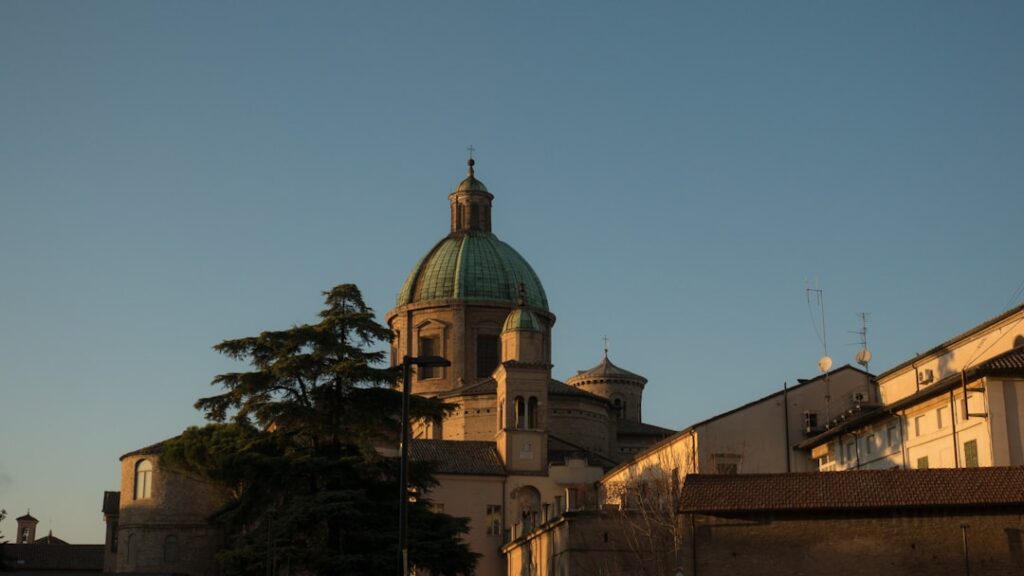
The Battistero degli Ariani, by contrast, is tied to the Ostrogothic kingdom and the Arian community that dominated Ravenna in the early 6th century under Theodoric the Great. The theological differences — particularly how Christ’s divinity was conceived — show up less in visible texts today than in ancient decorative and iconographic choices. Exact address: Battistero degli Ariani, Via degli Ariani, 48121 Ravenna RA, Italy. This baptistery also features a centralized layout but with subtle variations in how Christ and the saints are depicted, along with later interventions that tell the story of the site’s eventual orthodox recovery.
Understanding these two buildings requires placing the visit within the local chronology: they hosted initiation rites (baptisms) that in their time involved immersion or ritual sprinkling beneath a cosmic dome. Their preservation in Ravenna is exceptional, and the still-readable mosaics make these places as much theological documents as artistic monuments. On a guided tour, emphasis is placed on the political context (Ostrogothic rule and later Byzantine reconquest), on changes in liturgical practice, and on how geometry directs the worshipper’s gaze toward the center — Christ or the baptismal scene — a symbol of reintegration into the ecclesial community.
Architectural analysis: shapes, axes and geometric symbols
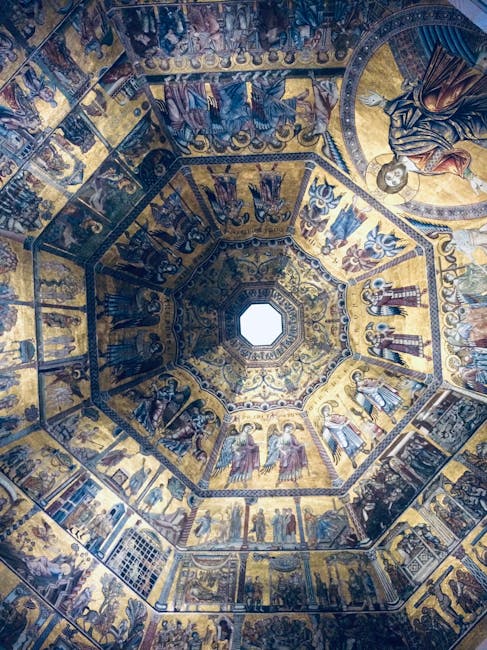
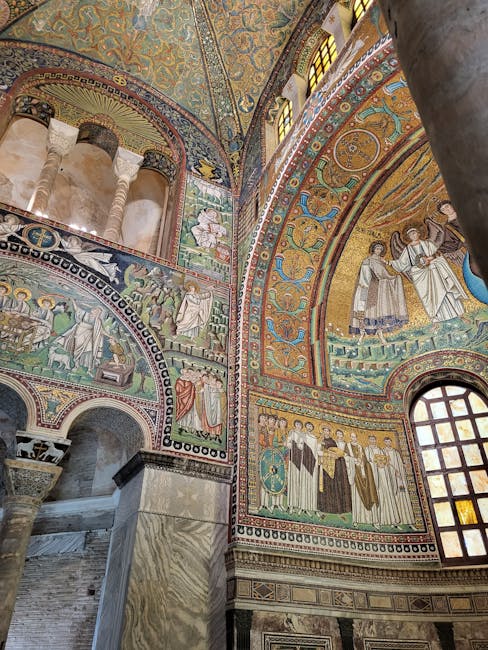
The geometric reading of Ravenna’s baptisteries starts with observing the centralized plan. Both buildings use a circular or octagonal plan that focuses attention and supports acoustics and liturgy. The circle stands for infinity, eternity and the cosmos; the octagon long symbolized the transition between the square (earth) and the circle (heaven): eight sides representing new creation after the seventh day. In the Battistero Neoniano, the central dome features a broad medallion where Christ is shown at the moment of baptism, surrounded by angels arranged in a radial rhythm that reinforces the center as the point of spiritual convergence.
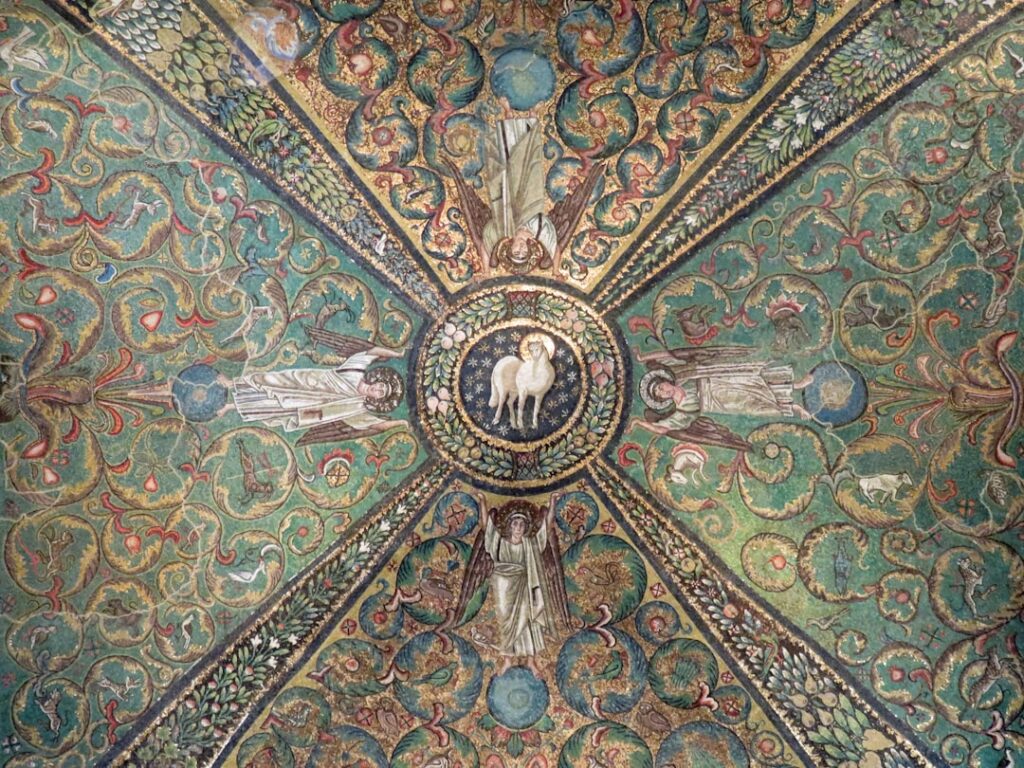
Mentally measure the proportions: the diameter of the baptismal font, the height under the dome, the thickness of the walls — all contribute to an acoustics that amplifies liturgy and chant. The mosaics act as an extension of the geometric structure: concentric bands, alternating friezes, panels subdivided according to simple mathematical ratios (1:2, 2:3) that govern pattern repetition and scene hierarchy. In the Battistero degli Ariani, some later decorative additions altered the original order, but radial partitions are still readable, with figures placed at precise angles as if to symbolically orient viewers toward the cardinal points or toward the central scene.
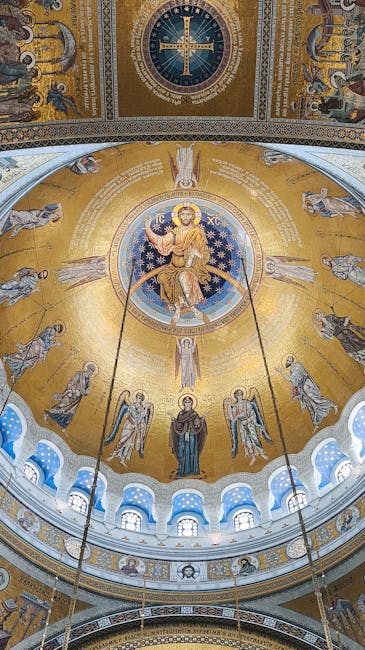
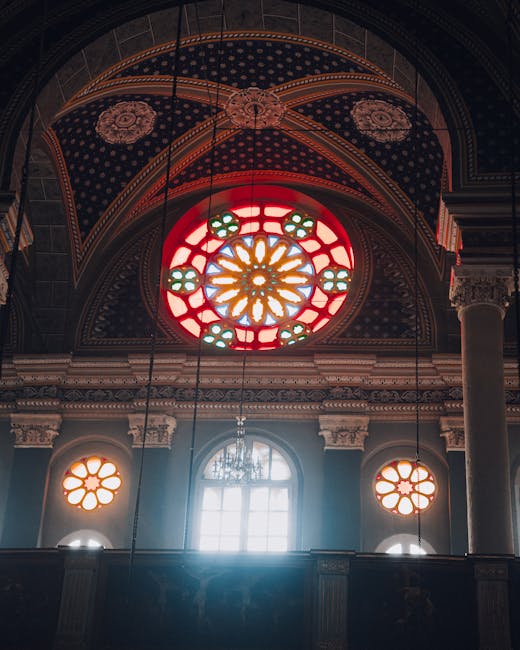
Geometry also reveals itself through the use of light: small high windows, often facing east, let shafts of light cross the golden tesserae and produce an intentional shimmering effect. The slanted shadows and gold reflections heighten the sense of a space outside of time. For the curious visitor, a loupe will reveal the precision of tesserae alignments, the regularity of concentric circles and how color follows a chromatic logic tied to liturgy — blues for the sky, golds for divinity, greens for symbolic vegetation.
Practical visit guide: hours, tickets, tips and route
To make the most of your comparative visit to the two baptisteries, here are practical, field-tested details and local tips.
- Battistero Neoniano (Battistero degli Ortodossi)
Address: Piazza del Duomo, 48121 Ravenna RA, Italy.
Indicative hours: 9:00–18:00 (April–September), 9:00–17:00 (October–March). Check ahead for public holidays.
Price: individual entrance around €3.00. Combined ticket with the Museo Arcivescovile and the Cappella di Sant’Andrea often around €10.00.
Tips: arrive early in the morning for low-angle light that reveals mosaics without the crowds. Photography allowed without flash. Group access may be limited in high season.
- Battistero degli Ariani
Address: Via degli Ariani, 48121 Ravenna RA, Italy.
Indicative hours: 10:00–17:00 (hours vary by season). Closed on some public holidays—check the official site of the Soprintendenza Archeologia Belle Arti e Paesaggio.
Price: individual entrance around €3.00. Reduced rates for students and seniors.
Tips: combine this visit with the Basilica di Sant’Apollinare Nuovo (Piazza Arcivescovado, 2) and the Basilica di San Vitale (Piazza San Vitale, 1) for a comprehensive view of artistic contrasts. Be prepared for steps and uneven floors — comfortable shoes recommended.
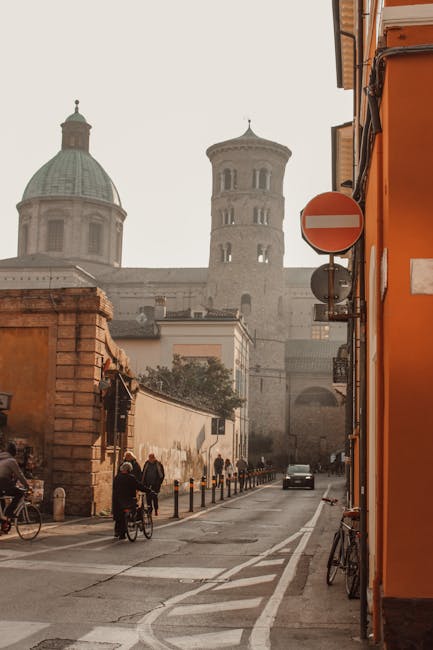
Transport and access: Ravenna is easy to explore on foot or by bike. The main train station is Stazione di Ravenna (Viale Europa, 13, 48121 Ravenna), about a 20–30 minute walk from the historic center. Local ATRP buses serve the main sites. For parking, prefer peripheral lots (e.g. Parcheggio Centro Storico, Viale Farini) and walk the rest of the way.
Visiting rules: do not touch the mosaics, avoid flash photography, and if you want to film a contemporary ceremony or baptism, ask permission. Audio guides in several languages are often available at the Museo Arcivescovile and at local tourist offices (Ufficio Informazioni e Accoglienza Turistica, Piazza del Popolo, 48121 Ravenna; generally open 9:00–18:00; audio-guide rental from around €3.00).
Conclusion — Reading faith through geometry
Ravenna’s baptisteries, the Battistero Neoniano and the Battistero degli Ariani, are much more than historic chapels: they are sacred devices where geometry served theology and liturgical experience. Through circles, octagons, radial axes and reflective mosaics, builders conveyed a worldview: the person entering the sacred space is called to a ritual transformation, symbolized by the alignment of forms and the convergence of the gaze toward the center. Comparing the two rites on site helps reveal how differing beliefs produced subtle but meaningful variations in layout, light and iconography.
Practically speaking, the visit requires some preparation: check official opening times before you go, consider combined tickets to save money, favor morning visits off-season for the best light and quiet, and respect conservation rules. The experience is accessible even to non-specialists: paying attention to proportions, the relationship between floor and dome, and the placement of mosaic figures is enough to start « reading » the sacred geometry. For the curious traveler, Ravenna offers a rare chance to observe two architectural answers to intense religious questions side by side — a concentrated lesson in history, art and spirituality contained within modest but powerful spaces.
As you leave, remember that these buildings continue to live through visits, scholarship and occasional contemporary ceremonies. Their beauty is not only visual but cognitive: it invites reflection on how forms influence beliefs and behavior. Whether you’re an architect, historian, pilgrim or casual traveler, an afternoon spent comparing these two baptisteries will give you a valuable key to understanding Ravenna — a city where geometry and faith have been in dialogue for nearly fifteen centuries.