





Introduction: Ravenna, a Crossroads of Confessions and Mosaics
Ravenna isn’t just a charming stop along the Adriatic — it’s a literal picture book in stone and glass, where political history, theology and Byzantine art overlap. At the heart of this UNESCO World Heritage town, two small buildings dedicated to the rite of baptism draw you in with their intimacy and symbolic weight: the Battistero Neon (often called the Orthodox Baptistery) and the Battistero degli Ariani (the Arian Baptistery). These neighboring baptisteries offer a visual lesson in how the same Christian ceremony was interpreted, decorated and used for identity by opposing confessions. Understanding “the Baptistery of the Two Confessions” in Ravenna means stepping into a silent conversation of images, colors and doctrine.
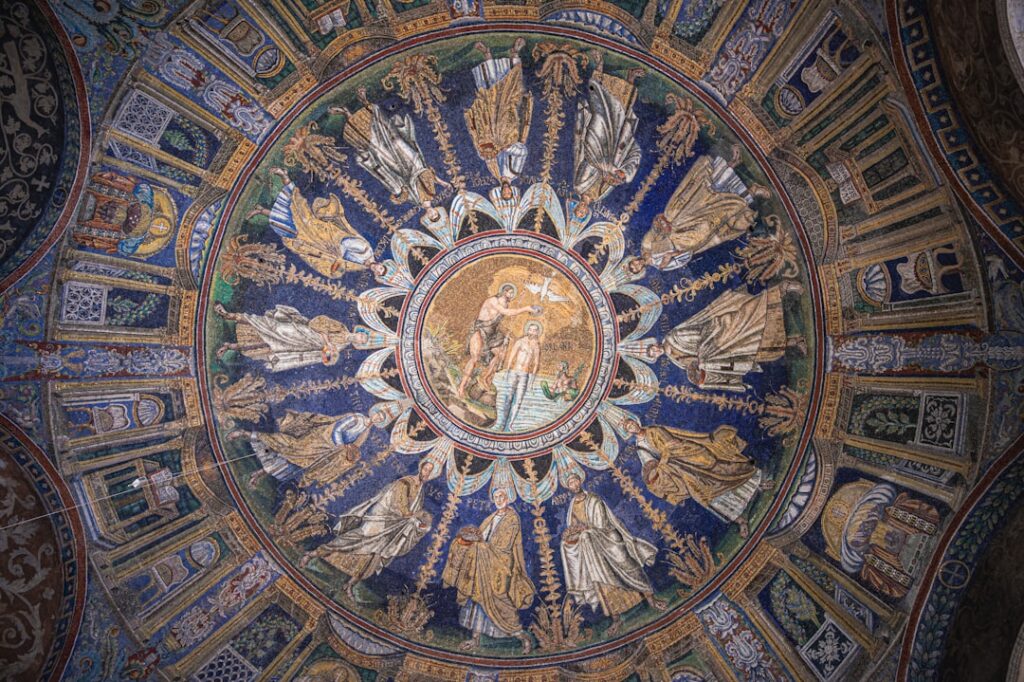
The word baptistery instantly evokes water and spiritual rebirth; in Ravenna, the baptistery is also a stage where different theologies play out. The Battistero Neon, near the cathedral, is a fifth-century mosaic masterpiece where Christ anchors the central space, surrounded by cherubs and scenes of Christ’s baptism in the Jordan. The Battistero degli Ariani, built a little later under Ostrogothic rule, presents an iconography tuned to Arian theological readings — a strand of Christianity that questioned the consubstantiality of the Father and the Son. Those differences show up in gestures, poses and symbolic choices that, to today’s visitor, are keys to decoding a complex past.
Visiting both sites in a single morning or afternoon makes for a unique comparative study: look at mosaic techniques, palette choices, the Latin and Greek inscriptions, and don’t forget the political backdrop — Ravenna was imperial, then Gothic, then Byzantine capital. The contrast is striking: Battistero Neon favors an older, more “orthodox” aesthetic in the ancient sense of the word, while the Battistero degli Ariani bears the marks of a contested theology that has since become heritage. Beyond religious history, these spaces are places of quiet reflection, summertime cool and filtered light that makes the mosaics sparkle differently depending on the hour and orientation.
This in-depth guide walks you step by step through both baptisteries, decodes the most common symbols (the lamb, the fish, the palm, the dove), explains iconographic and technical differences, and gives all the practical information you need to plan a visit: exact addresses, prices in euros, opening hours, tips on the best time to see the mosaics, photography advice and ideas for extending your stay in Ravenna. Whether you’re an art lover, a heritage pilgrim or a curious traveler, you’ll leave with a clearer sense of what baptism meant for two different confessions — and why Ravenna, more than many cities, embodies this dialogue between image and faith.
 Click here to book a visit to the UNESCO-listed mosaics
History and Context: Why Two Baptisteries in Ravenna?
To understand why two opposed baptisteries exist side by side, you need to go back to the centuries when Ravenna was a political and religious hub. After the fall of the Western Roman Empire, Ravenna became the administrative capital for the Eastern Roman Empire (6th century) and later the seat of the Ostrogothic kingdom. It’s precisely in this melting pot of power that different readings of Christianity coexisted and clashed. The Battistero Neon (Orthodox Baptistery), at Piazza del Duomo, 48121 Ravenna RA, Italy, dates to the late 5th century and is tied to the baptism of catechumens within the Byzantine-Catholic tradition.
The Battistero degli Ariani, on the other hand, was founded in the 6th century under the Ostrogoths, when Arianism was the dominant confession among some Germanic peoples. Although orthodoxy (used here to mean the Church of Rome/Byzantium) eventually prevailed politically, material traces of Arianism remain — notably this baptistery, built so that that community could celebrate the rite according to its convictions.
These two monuments show how architecture and art became tools for doctrinal assertion. Battistero Neon favors a narrative, solemn iconography centered on Christ’s baptism, the baptism of catechumens and symbols of resurrection. The Battistero degli Ariani, smaller and more austere, depicts Christ and baptismal scenes with different expressive tones, reflecting a theology that historically stressed the distinction between the Father and the Son. These differences are not merely symbolic: they affect liturgy, the layout of the space (where the baptismal font is placed, how catechumens entered), and decorative choices (color palettes and geometric motifs).
Archaeologically, both baptisteries show shared technical practices — opus musivum, colored glass tesserae — alongside local adaptations. Restoration work by the Soprintendenza Archeologia, Belle Arti e Paesaggio di Ravenna has revealed successive layers of repair and reuse, evidence of the buildings’ long liturgical life. Today the baptisteries are visited separately but function as a paired teaching resource: by looking at their mosaics side by side, visitors can literally read the theological and aesthetic “conversation” that ran through Ravenna during the first millennium.
Click here to explore Ravenna on a guided walking tour
Detailed Iconography: Motifs, Colors and Meanings
Stepping into a baptistery in Ravenna is like entering a space where every motif was chosen to teach. In the Battistero Neon, the dome’s central mosaic shows Christ’s baptism in the River Jordan; Christ is often depicted with a halo, standing with his feet on a rock as John the Baptist pours water over him. Around the scene, processions of angel-musicians and images of biblical figures and marine symbols (fish, nereids) punctuate the narrative. Golden glass tesserae are laid to create shifting light effects: gold stands for the heavenly and divine, deep blue evokes water and the cosmos.
In the Battistero degli Ariani the approach is more concentrated: a triumphant Christ often dominates the dome, surrounded by liturgical symbols and allegorical figures that emphasize Christ’s authority without necessarily depicting the Jordan scene in the same narrative way. The palettes there can be more restrained, with greater use of earthy tones and greens, yet the tesserae technique remains superb. Both sites share recurring motifs: the paschal lamb (sacrifice), the fish (ichthus, symbol of Christ), the palm (victory and eternal life) and the dove (Holy Spirit).
Reading these images takes attention: notice where the figures are looking (who is looking at whom), the direction of gestures (who pours and who receives), and the presence or absence of Latin or Greek inscriptions. These details reveal doctrinal preferences and artistic influences — Byzantine, late Roman or Gothic. Modern restorations can now distinguish original layers from later interventions, sometimes uncovering iconographic corrections made when the dominant doctrine shifted.
Click here to admire the raw beauty of the Byzantine mosaics
Visiting the Baptisteries: Addresses, Prices, Opening Hours and Practical Tips
Planning a visit to Ravenna is easy if you know the addresses and opening hours. Here’s the up-to-date practical info (always check for seasonal changes):
- Battistero Neon (Orthodox Baptistery) — Address: Piazza del Duomo, 6, 48121 Ravenna RA, Italy. Admission: around €5.00 per person (indicative). Hours: generally daily 9:00–19:00 in high season (April–October), and 9:00–17:30 in low season (November–March). Closed on some holidays; check the Soprintendenza website.
- Battistero degli Ariani (Arian Baptistery) — Address: Via degli Ariani, 1, 48121 Ravenna RA, Italy. Admission: around €5.00. Hours: often 9:00–18:00 in summer, 9:00–17:00 in winter. It’s sometimes included in a combined ticket for Ravenna’s Byzantine monuments (5-site combined ticket: around €11–14).
Practical tips for your visit:
- Best time: Aim for the morning (9:00–11:00) or late afternoon (16:00–18:00): the low sunlight enhances the gold mosaics and crowds are lighter.
- Photography: Most sites allow photography without flash. Avoid flash to protect the mosaics and respect quiet zones.
- Combined tickets: Buy the combined « Byzantine Monuments » ticket, which usually covers San Vitale (Via Argentario, 22), the Mausoleum of Galla Placidia (Via Argentario, 22) and others; it saves money and simplifies planning.
- Visit length: Allow 30–45 minutes per baptistery for a careful reading of the mosaics; a half-day is enough to see both plus one or two nearby monuments.
- Accessibility: The baptisteries are small and some passages can be narrow. Strollers are not very practical; contact the sites if you have specific accessibility needs.
Click here to buy your tickets for the listed mosaics
Analytical Comparison and Suggested Route
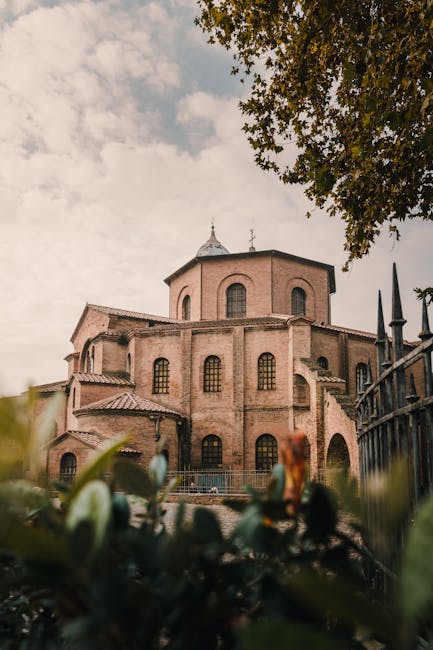
To get the most out of your visit, follow an itinerary that places the two baptisteries in context with other key monuments. Start at the Battistero Neon (Piazza del Duomo), then walk to the Battistero degli Ariani (Via degli Ariani): the short stroll between them reveals Ravenna’s urban layout, its narrow streets and brick facades. After both baptisteries, continue to the Basilica di San Vitale (Via Argentario, 22, 48121 Ravenna RA) and the Mausoleo di Galla Placidia (same address) to round out your mosaic study.
Quick comparative take: Battistero Neon charms with its storytelling and gold leaf effect — it’s perfect for watching gesture dynamics and narrative scenes. Battistero degli Ariani impresses with its concentrated composition and economy of means, highlighting a sovereign Christ. Together they provide a wide-angle view of Christian diversity in early medieval Ravenna. Carry a notebook or note-taking app to jot down recurring motifs and compare details: inscriptions, figure placement, color palette and any symbolic asymmetries.
Last tips: buy tickets online in high season to skip queues, wear comfortable shoes as stone floors can be slippery, and allow 2–3 hours for an in-depth visit to both baptisteries and nearby monuments. Don’t forget to enjoy the terraces and cafés around Piazza del Popolo to digest what you’ve seen — Ravenna rewards slow, reflective pauses.
Click here to join a walking tour dedicated to the mosaics
Conclusion: Decode, Feel, and Place It in Today’s World
The Baptistery of the Two Confessions in Ravenna is more than a museum curiosity: it’s an invitation to read history in images and to see how art served faith and power. By comparing Battistero Neon and Battistero degli Ariani, visitors encounter a crucial page of European history where theology was communicated not only through texts but through colors, gestures and materials. Golden glass tesserae, angelic figures, fish and palms aren’t mere decoration — they are words translated into light.
Practically speaking, Ravenna’s riches are best savored slowly: watch the light play across the mosaics, read translations of inscriptions when available, and let the city tell you how religious identities coexisted, competed and ultimately fused. The addresses and hours given here (Piazza del Duomo for Battistero Neon and Via degli Ariani for Battistero degli Ariani) should help you plan a coherent visit. The indicative prices (around €5 per baptistery, or a combined ticket €11–14) keep these treasures accessible to most travelers.
Finally, don’t just admire — ask questions. Why this gesture in this mosaic? Why that palette over here? By asking, you make the history your own. Ravenna isn’t frozen: it lives through visits, scholarship and restoration, and each new generation adds its reading. Returning to Ravenna is like rejoining an ancient dialogue, where two baptisms tell a shared faith in different shades. Take your time, respect the sites, and let these mosaics speak to you — they’ve crossed centuries to deliver a message of renewal and hope.