





Introduction: Golden Secrets — the story behind Ravenna’s Byzantine mosaics
Ravenna, a compact city at the crossroads of Mediterranean cultures, is a place where stone and glass tell the story of an empire. In the 5th and 6th centuries, as Rome faded, Ravenna rose to prominence as a political, religious and artistic hub: seat of the Byzantine Exarchate in Italy, it drew craftsmen and patrons who developed a new visual language — the Byzantine mosaic. The gold tesserae, the depth of lapis-lazuli blues, and the holy and imperial figures set against golden backgrounds give Ravenna a unique, almost liturgical atmosphere that still resonates today. This article is a detailed, general guide to these treasures for curious visitors who want to know not just where to go, but why these mosaics are special and how to appreciate them.
Beyond pure aesthetic wonder, Ravenna’s mosaics are historical documents: they reflect the transition from Roman to Byzantine art, official theology, and political stakes (imperial portrayals, theological symbols, liturgical gestures fixed in glass). Visiting Ravenna is like reading a story in images, where each basilica, baptistry or mausoleum offers a different “page” — from imperial portraits to the iconography of Christ Pantocrator, from Gospel scenes to symbolic vegetal motifs.
This guide gives practical, immersive information: exact addresses, opening hours, ticket prices in euros, descriptions of major works, recommended walking routes, photography tips and suggestions to avoid crowds. You’ll also find notes on conservation — why these mosaics survived when many other ancient works were lost — and local recommendations to extend your experience (nearby cafés, complementary museums). The main sites — Basilica of San Vitale, Mausoleo di Galla Placidia, Battistero Neon (Neonian Baptistery), Basilica of Sant’Apollinare Nuovo, Battistero degli Ariani (Arian Baptistery), Mausoleo di Teodorico, and Basilica of Sant’Apollinare in Classe — are described in detail to help you plan a one-day visit or a weekend.
Whether you’re an amateur historian, a photographer, a cultural traveler or simply curious, this guide will help you read the mosaics — to understand material choices, light effects and the role of the golden background — and to experience Ravenna not just as a tourist destination but as a living museum. Practical tips (best times to visit, combined tickets, rules of silence and respect in places of worship) will help you enter this sacred, golden atmosphere with the care it deserves.
Basilica of San Vitale and Mausoleo di Galla Placidia — imperial dazzle and golden poetry
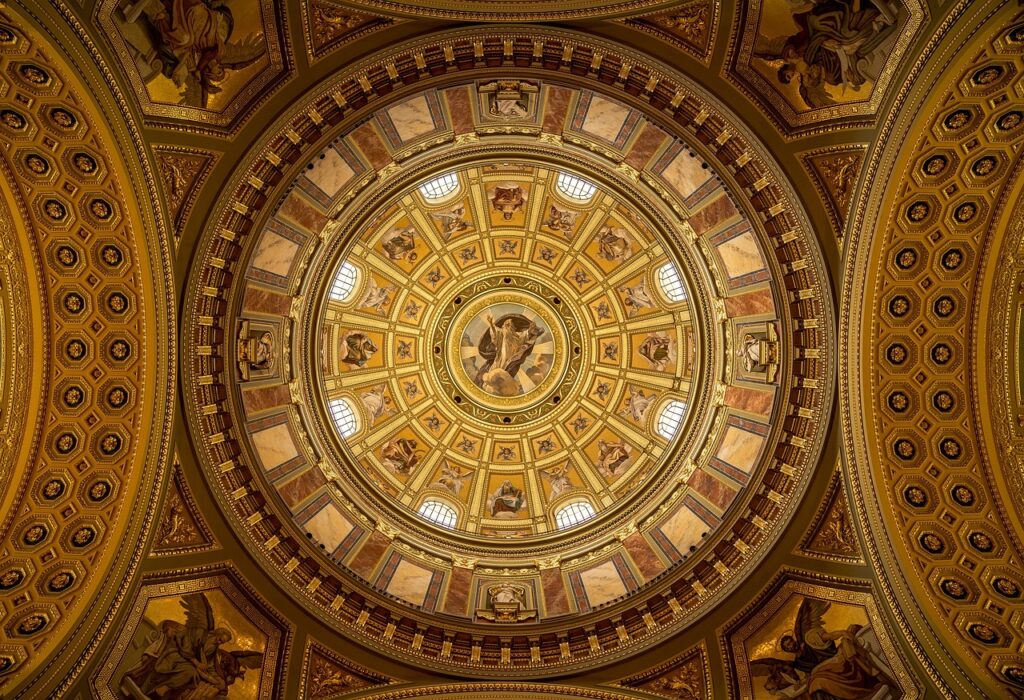
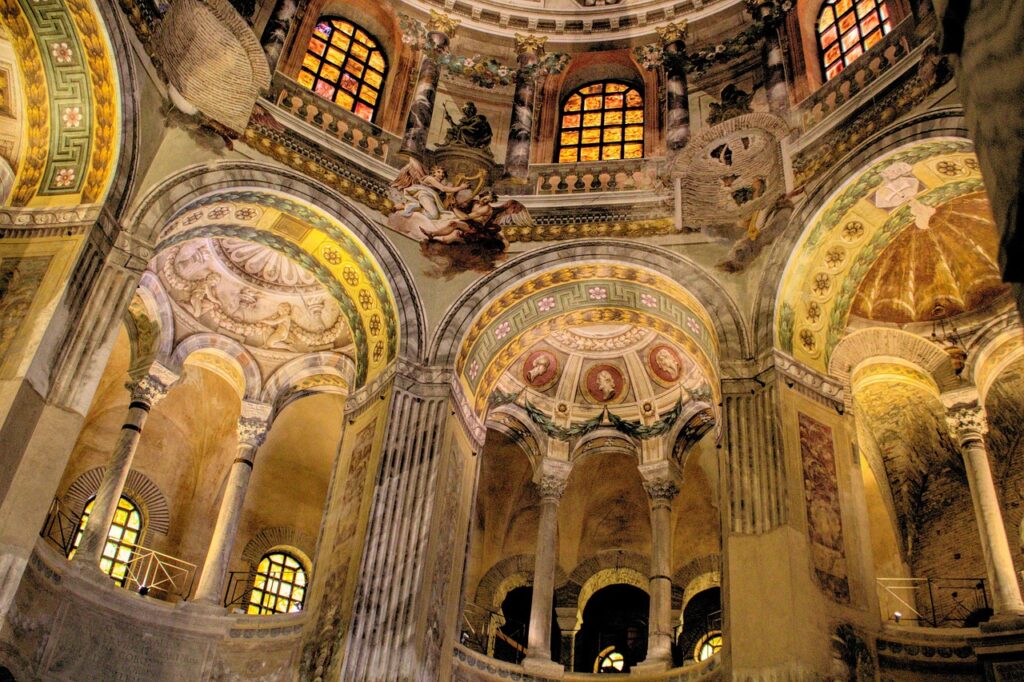
Basilica of San Vitale (Piazza San Vitale, 5, 48121 Ravenna RA, Italy) and the nearby Mausoleo di Galla Placidia (Piazza San Vitale, 2, 48121 Ravenna RA, Italy) form Ravenna’s must-see pair. The basilica, consecrated in 547 under Byzantine authority, has an octagonal central plan and a mosaic decoration of rare chromatic richness. Inside, the apse features the famous depiction of Emperor Justinian and his court alongside a procession of saints — an image that is as political as it is liturgical. Hundreds of gold tesserae catch the light from the windows, creating the impression of a shifting inner sky.
The Mausoleo di Galla Placidia, modest in size but powerful in emotional impact, is famous for its star-studded ceiling and the figure of the Good Shepherd (Christ as shepherd) on a golden field. The effect is almost microscopic: blue and gold tesserae produce a sense of cosmic vastness within a small structure, intensifying the intimacy of prayer. That contrast — the architectural grandeur of San Vitale and the mausoleum’s intimate cosmic atmosphere — explains why these two monuments are often visited together.
Hours and tickets (indicative):
- Basilica of San Vitale — Hours: Monday–Sunday, 9:00–18:00 (last entry 17:30). Full price: €9.00 (reduced rates available for certain categories).
- Mausoleo di Galla Placidia — Hours: Monday–Sunday, 9:00–18:00. Full price: €5.00. Often included in the combined « Ravenna Card. »
Practical tips: arrive early to enjoy the side light and avoid tour groups. In the basilica, stand on the north side of the apse for a view that reveals both the mosaics and the building’s spatial dynamics. Observe silence zones and avoid flash to protect the tesserae.
Baptistries and Christian mosaics: Battistero Neon and Battistero degli Ariani
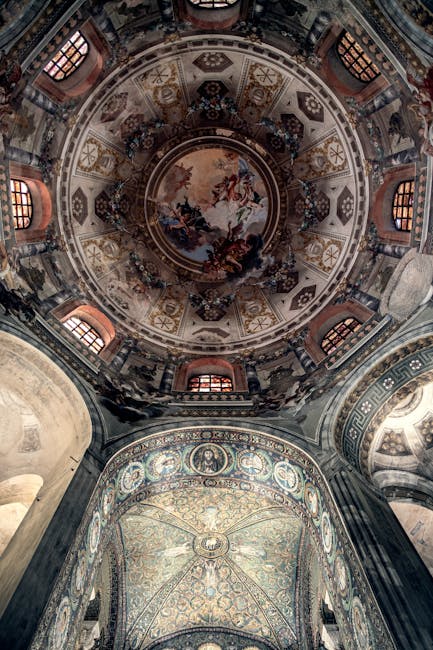
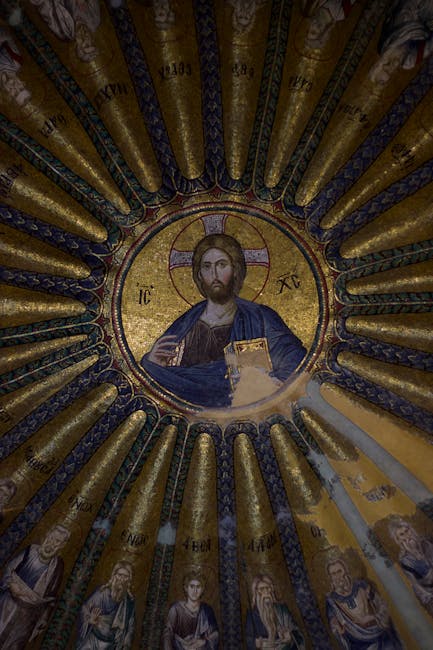
Ravenna’s baptistries are among the oldest and most expressive in the Western Christian world. The Battistero Neon (Neonian Baptistery), often called the Battistero degli Ortodossi, sits at Piazza Duomo, 1, 48121 Ravenna RA, Italy. Dating from the 5th century, its dome is decorated with a spectacular image of Christ in glory surrounded by the procession of the twenty-four elders from the Apocalypse — an apocalyptic theme rendered in gold and deep blue. The Battistero degli Ariani (Arian Baptistry), located at Via degli Ariani / Piazzetta degli Ariani (near the Basilica of Sant’Apollinare Nuovo), offers a different perspective: it bears witness to the sometimes tense coexistence between Nicene Christians and Arians in the 6th century, with youthful portrayals of Christ and more linear compositions.
Hours and tickets (indicative):
- Battistero Neon (Piazza Duomo, 1) — Hours: 9:00–17:30 (may close earlier in winter). Price: €5.00.
- Battistero degli Ariani (Via degli Ariani, Ravenna) — Hours: 9:00–17:00. Price: €4.00–€6.00 depending on season and combined tickets.
These two baptistries show how mosaic was used to teach doctrine: biblical narratives, the authority of Christ and baptismal liturgy are presented in a visual language accessible to the faithful. Take time to watch the play of light on the dome mosaics — colors shift with the hour and the sun’s orientation.
Local tips: before entering, pause for a moment to appreciate the baptistry’s silence — the space was designed for the acoustics of baptismal liturgy. If you have a Ravenna Card (combined ticket), check for priority access times. Avoid service hours if you want to take photos without interruption.
Sant’Apollinare Nuovo and Sant’Apollinare in Classe — narrative and liturgical landscape
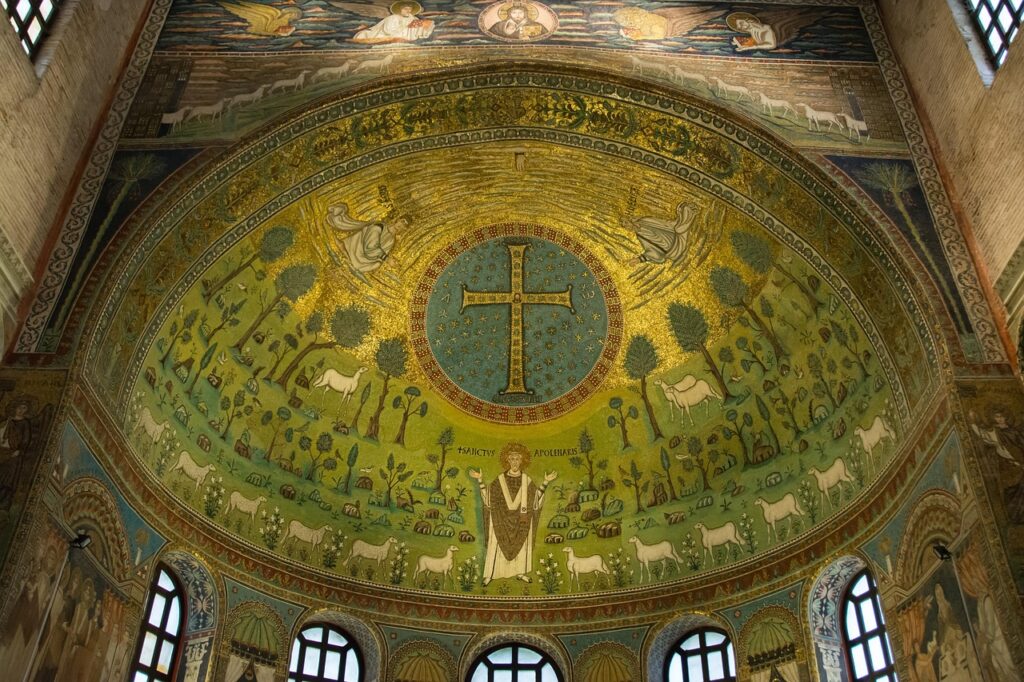
The Basilica of Sant’Apollinare Nuovo (Via di Roma, 52, 48121 Ravenna RA, Italy) and the Basilica of Sant’Apollinare in Classe (Via Romea Sud, 224, 48122 Classe RA, Italy) offer two complementary visions of mosaic art: one urban and palatial, the other rural and monumental. Sant’Apollinare Nuovo, built by Theodoric and later reworked under Byzantine rule, displays a long narrative frieze of saints and Gospel events — a continuous procession that guides the viewer’s eye. The scenes are linear, calm, and express a theology grounded in community life.
Sant’Apollinare in Classe, located a few kilometers from the city center (in ancient Classe, the old seaport), is notable for its imposing nave and an apse where Christ in majesty, accompanied by shepherds and angels, presides over a wide field of mosaics. The iconography there is more solemn, almost imperial, fitting a major pilgrimage site. The contrast between the two basilicas illustrates how mosaic language adapted to different liturgical and social contexts.
Hours and tickets (indicative):
- Basilica of Sant’Apollinare Nuovo (Via di Roma, 52) — Hours: 9:00–18:00. Price: €6.00–€8.00 depending on exhibitions or events.
- Basilica of Sant’Apollinare in Classe (Via Romea Sud, 224) — Hours: 9:00–17:00. Standard entry: €6.50 (reductions possible).
For the visit: combine Sant’Apollinare Nuovo with a stroll through the historic center (Via di Roma, medieval streets and cafés). For Classe, allow for transportation (local bus 4 or taxi, about 15–20 minutes from the center) and plan at least an hour and a half to feel the scale of the place.
Mausoleo di Teodorico and the dialogue between Gothic and Byzantine
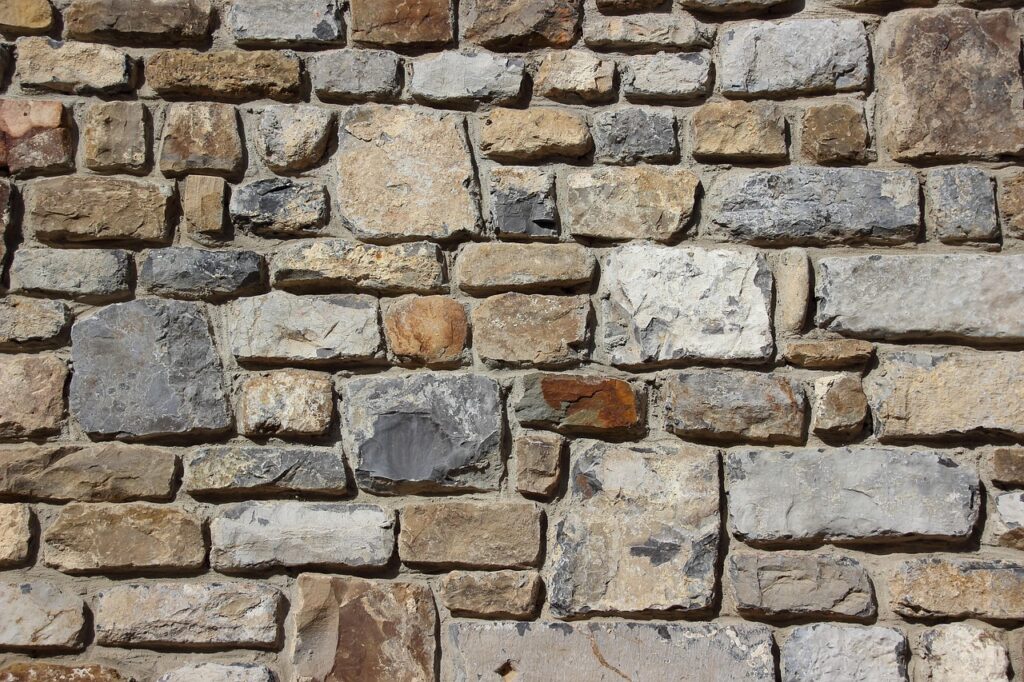
The Mausoleo di Teodorico (Via Galla Placidia? / Viale Farini area — historic center of Ravenna) testifies to another historical layer: the Ostrogothic presence on the peninsula. Built for the Ostrogoth king Theodoric the Great — and often linked to Germanic architectural influences — this mausoleum shows how Ravenna was a meeting point where Western and Eastern traditions crossed. While its ornamentation is less dense than that of the Byzantine churches, the carved panels and monumental simplicity create a compelling contrast.
Hours and tickets (indicative):
- Mausoleo di Teodorico — Hours: 9:00–17:00. Price: €3.50–€5.00 (depending on ticketing and inclusions).
The archaeological context and a comparative reading between Byzantine mosaics and Ostrogothic architecture enrich the visit. Notice how the Gothic funerary sobriety converses with the golden splendor of neighboring churches — a lesson in artistic, political and religious coexistence.
Practical tips, routes and conservation
Plan your visit with a few simple rules in mind: wear comfortable shoes (uneven floors), respect prayer areas, avoid flash and tripods without permission, and look into combined tickets (Ravenna Card) which can save money if you plan to visit several sites. Most monuments accept cards and cash, but keep some euros on hand for small expenses.
Suggested one-day itinerary:
- Morning: start with the Basilica of San Vitale and the Mausoleo di Galla Placidia (arrive at opening to enjoy soft light and fewer crowds).
- Late morning: Battistero Neon and the Cathedral (Piazza Duomo), then lunch in the neighborhood (recommended café: a local pastry shop or piadina place on Via Cavour near the Duomo).
- Afternoon: Sant’Apollinare Nuovo then the Mausoleo di Teodorico, or travel to Sant’Apollinare in Classe if you prefer countryside and open space.
Conservation: mosaics are fragile; local authorities control temperature and humidity, limit lighting and regulate access. Periodic restorations are carried out by the Soprintendenza Archeologia Belle Arti e Paesaggio per le province di Ravenna. Follow the rules so these treasures endure for future generations.
Conclusion: reading the gold — Ravenna’s living legacy
Ravenna is more than a collection of remarkable monuments; it’s a visual laboratory recording centuries of cultural exchange and religious change. Byzantine mosaics, with their illuminating power, speak of a time when art served political and spiritual purposes. Wandering the cobbled streets — from the splendor of San Vitale to the starry silence of the Mausoleo di Galla Placidia, through the narrative domes of the baptistries — visitors encounter a continuous narrative made of frozen gestures, gold and light.
To get the most from your stay: take time to observe, read inscriptions, listen to a local guide (licensed guides offer archaeological and theological keys to understanding), and favor quiet hours. Buy the Ravenna Card if you plan to visit multiple sites: it often saves money and simplifies access. Remember that behind every tessera are hands and know-how: restorers, historians and local communities work to preserve these luminous surfaces. By visiting Ravenna with attention and respect, you’ll help, in your own way, to ensure this golden legacy endures.