





Introduction
Ravenna, a small Italian town on the Adriatic edge, is basically an open-air museum where Byzantine history left legendary traces: glittering mosaics, vibrant basilicas and baptistries that look like they stepped out of a fairy tale. Among these treasures, two buildings stand like neighboring sisters born from different Christian traditions: the Battistero Neon (often called the Battistero degli Ortodossi or Baptistry of the Orthodox) and the Battistero degli Ariani (Baptistry of the Arians). These are places of memory, art and ritual — and also little goldmines of anecdotes, mysteries and architectural curiosities that delight the curious traveler.
This article dives into the details of these two baptistries, not just with immersive historical descriptions but also a collection of local anecdotes, visual curiosities and practical tips to plan an unforgettable visit to Ravenna. You’ll find exact addresses, opening hours and typical prices at the time of writing, recommendations for the best times to visit, observations about the mosaics and their restorations, and small — sometimes surprising — stories that surround these sacred sites.
Visiting a baptistry in Ravenna is more than just staring at a mosaiced dome: it’s feeling a living baptismal tradition embedded in stone, understanding how two Christian communities, Orthodox and Arian, competed in iconographic beauty, and seeing how natural light and the mosaics’ geometry create almost theatrical effects. The baptistries are quick to walk through but packed with details; a good visit requires slowness and a careful eye, hence our practical tips on photographing, listening and finding quiet corners to linger.
Finally, because a successful trip blends practical info and sensory pleasure, this piece includes concrete reference points: full monument names, postal addresses, prices in euros (usual rates and combined-ticket recommendations), typical seasonal hours, and tips on access, parking and nearby shops. Whether you’re a fan of Byzantine art, a photographer hunting the perfect light, or a curious traveler who loves local stories, this guide will give you a lively roadmap to explore Ravenna’s two baptistries.
The Battistero Neon (Battistero degli Ortodossi): history, mosaics and anecdotes
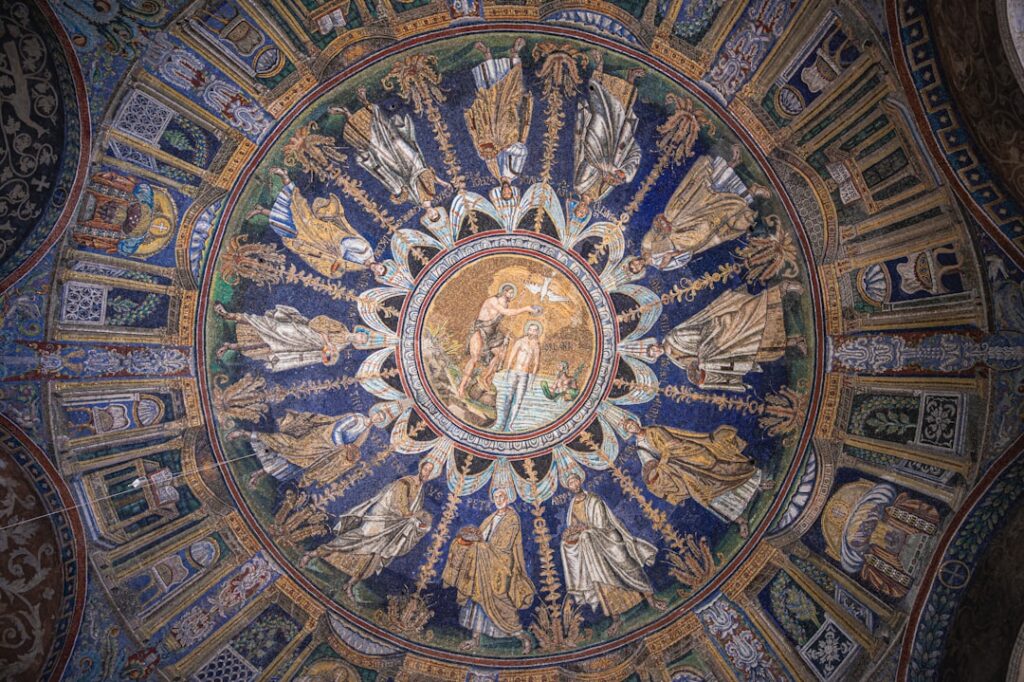
The Battistero Neon, officially called the Battistero degli Ortodossi, sits in the heart of historic Ravenna. Address: Battistero Neon (Battistero degli Ortodossi), Piazza Duomo, 48121 Ravenna RA, Italy. Built at the end of the 4th century and remodeled in the 5th, it’s famous for a dome completely covered with a central mosaic depicting Christ’s Baptism by John the Baptist, surrounded by cherubs and a procession of symbolic figures. The ensemble is a late-antique masterpiece that has inspired many scholars of Christian iconography.
The central mosaic in the baptistry stands out not only for its beauty but because it illustrates a very specific theology of baptism: the naked Christ, standing in the water, receives baptism while the dove of the Holy Spirit descends above him. Around him, angels hold garments — a narrative detail signaling the passage from the old world to the new. Faces are stylized, colors are deep (blues, golds and greens) and the dome’s curvature makes the scene seem to float above the visitor. This visual device turns the baptismal rite into a cosmic experience; it’s easy to see why the space was so sacred.
Local anecdote: a Ravenna guide says that for centuries mothers would walk around the baptistry’s exterior three times in procession before entering for a baptism — a popular custom that’s now almost gone, but it shows how the building was more than decoration; it was an active part of the city’s religious life. Another curiosity: in the Middle Ages the baptistry sometimes housed parish documents; registers found near the building helped historians piece together family histories from Ravenna.
Practical hours and prices (indicative; check before visiting): the Battistero Neon is typically open from 09:00 to 18:00 in high season (April–October) and 09:00 to 17:00 in low season (November–March). Typical entry fee: €5.00 for an individual visit. There are often combined tickets that include the Basilica di San Vitale (Piazza San Vitale, 5) and those packages usually range from €10.00 to €12.50 depending on the options. To make the most of your visit, aim for early morning: the soft light illuminates the dome and you’ll avoid the crowds.
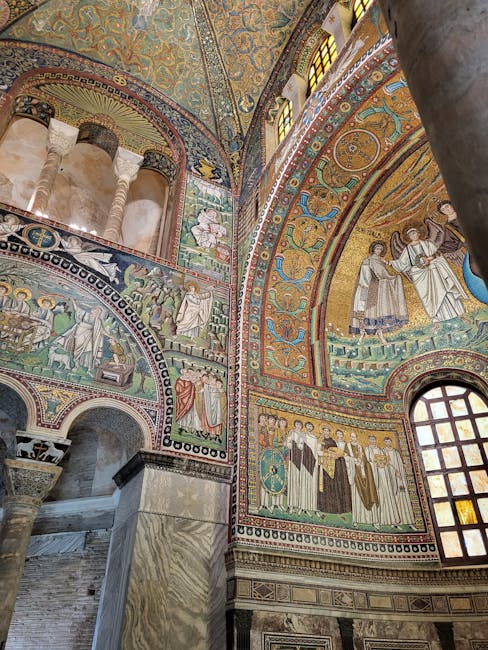
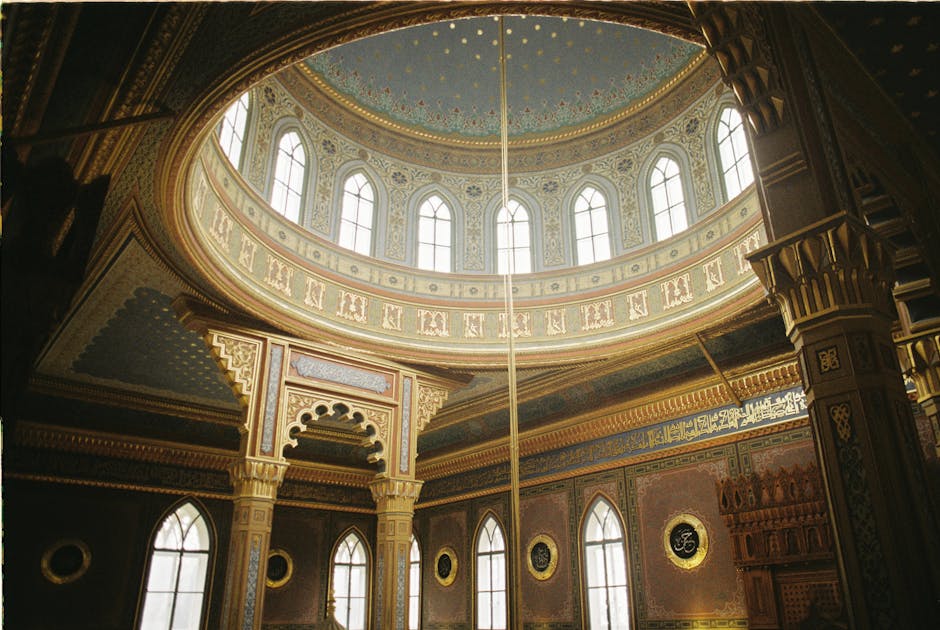
Practical tips: don’t miss the base of the walls and the pavement — floor mosaics and lower decorations often contain old repairs that tell the story of successive restorations. Audioguides or paper guides available on site offer useful explanations about the figures represented. Finally, observe silence rules and avoid flash photography to protect the tesserae (the small mosaic cubes), which are fragile and sensitive to intense, repeated light exposure.
The Battistero degli Ariani: Arian aesthetics, symbols and mysteries
The Battistero degli Ariani (Baptistry of the Arians) is located in central Ravenna and completes the city’s religious panorama with its distinct style and history. Address: Battistero degli Ariani, Via Paolo Costa, 1, 48121 Ravenna RA, Italy. Built in the 5th century under the Ostrogothic rule and associated with the city’s Arian community, it carries iconography and a liturgical approach slightly different from the Battistero Neon.
The dome mosaic of the Battistero degli Ariani shows Christ’s baptism in a cleaner, more pared-down style: Jesus is depicted front-facing, often more static, and the surrounding figures have more geometric, linear features. Angels hold garments and the dove of the Holy Spirit is present, but the iconographic interpretation differs subtly — some scholars see a stronger Western influence here, linked to Gothic patrons. The contrast between the two baptistries tells, in itself, the cultural shift between rival Christian traditions in Ravenna during the 5th and 6th centuries.
Anecdote: according to local guides’ tales, older residents claim the Battistero degli Ariani served as a discreet refuge during urban conflicts, particularly in times of occupation. The mosaics were supposedly covered with protective veils during threats to avoid destruction, then rediscovered almost intact — a story that underlines the place’s sacred and patrimonial value to the community.
Practical hours and prices (indicative): the Battistero degli Ariani is often open from 09:00 to 17:30 in high season and 09:00 to 17:00 in low season. Typical admission: around €4.00 for a simple visit. As with the Battistero Neon, combined tickets that include the Basilica di Sant’Apollinare Nuovo (Via di Roma, 37) can lower the total cost and make it easier to see Ravenna’s major mosaics.
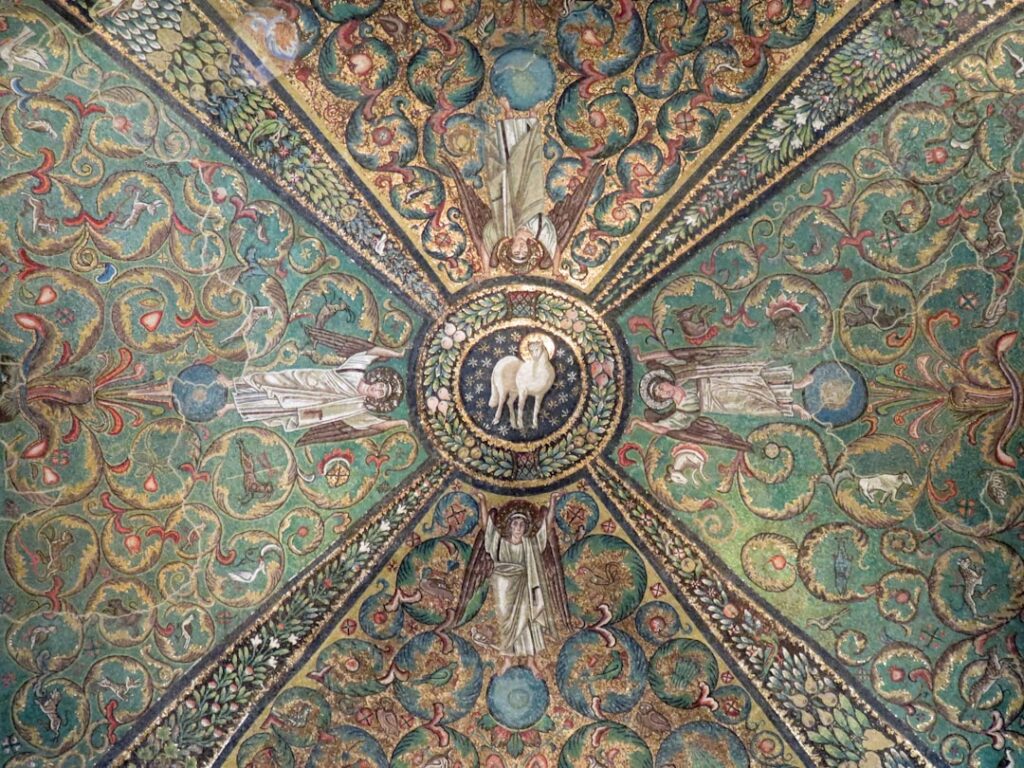
Practical tips: the Battistero degli Ariani is smaller and often less crowded than its orthodox counterpart — making it ideal for photographers who prefer empty frames. Note that the dome sits lower, so the way you perceive the mosaics changes a lot with your vantage point; step back, move closer, then tilt your head up to catch the details. Benches outside provide a quiet spot to pause before you enter.
Visual and technical comparisons of the mosaics: tesserae, colors and restoration
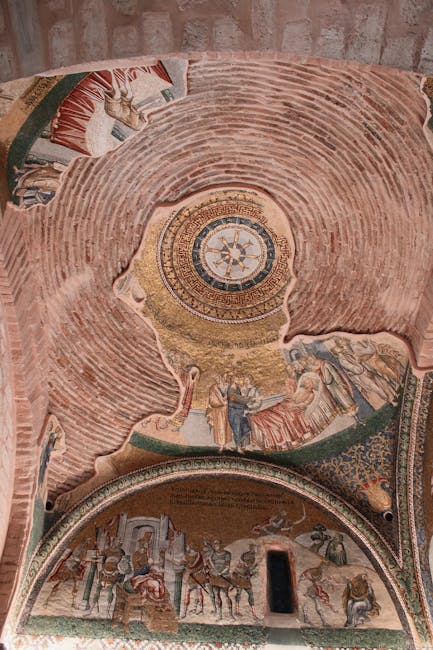
What fascinates visitors to Ravenna’s baptistries, beyond the history, is the mosaics’ very technique: the cut of the tesserae, the chromatic arrangement and the materials used (glass, gold, marble). Watching these details helps explain why Ravenna is so renowned. Golden tesserae, for example, are often set at an angle to catch the light and create a sparkling effect that shifts throughout the day. Byzantine skill shows in the delicate rendering of faces, while Western influences appear in the drapery’s geometry.
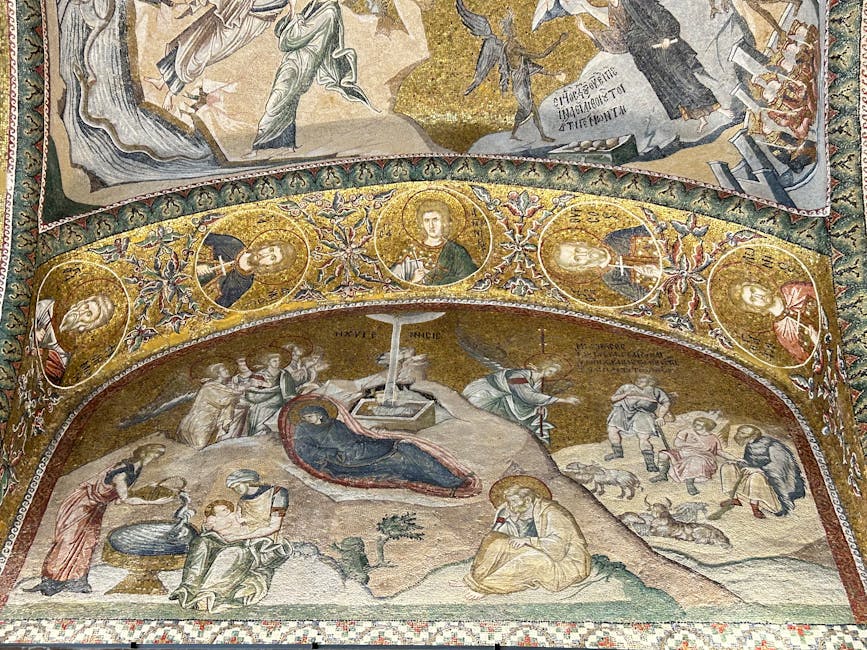
Restoration: restoring Ravenna’s mosaics has been a long, passionate effort since the 19th century. Conservators today use non-invasive techniques and materials compatible with the originals — neutral binders, targeted touch-ups and climate-control systems to stabilize humidity. Technical anecdote: during one restoration campaign conservators found fragments of a particular blue glass that allowed them to recreate a nearly lost shade; these rare pigments testify to long-distance trade and a taste for unique colors.
Aesthetic comparison: the Battistero Neon favors lush compositions and an empathetic realism in saints’ faces, while the Battistero degli Ariani opts for a solemn frontality and strict symmetry. For the attentive visitor, these differences reveal theological and political choices: Orthodoxy sought to envelop the faithful in a complex visual narrative, whereas Arianism displayed a geometrical, impactful solemnity.
Local practical tips: getting there, tickets, best times and food
Getting to Ravenna is easy from Bologna (regional train), Rimini or even Venice (longer but regular summer connections). Once there, most historic monuments, including the two baptistries, are in the compact city center, walkable on foot. Useful addresses:
- Battistero Neon (Battistero degli Ortodossi) — Piazza Duomo, 48121 Ravenna RA, Italy
- Battistero degli Ariani — Via Paolo Costa, 1, 48121 Ravenna RA, Italy
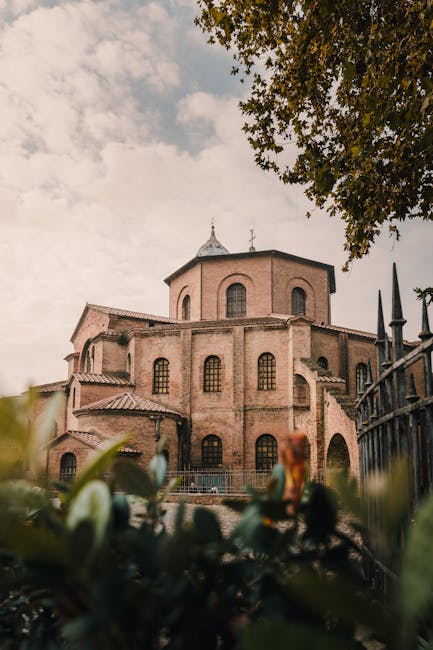
- Basilica di San Vitale — Piazza San Vitale, 5, 48121 Ravenna RA, Italy
- Basilica di Sant’Apollinare Nuovo — Via di Roma, 37, 48121 Ravenna RA, Italy
Tickets: there are often combined tickets for Ravenna’s museum monuments (San Vitale, Mausoleo di Galla Placidia, the baptistries, etc.). Prices vary: single-entry for a baptistry is around €4.00–€5.00, while a combined pass for several sites can range from €12.00 to €16.00. Discounts for students, seniors or groups are common. Tip: buy the combined ticket if you plan to visit at least three sites — it’s more economical and saves you time in queues.
Best time to visit: early morning (opening) or late afternoon, when side light reveals the mosaics’ gold. Midday in summer can be hot and crowded; off-season (November–March) offers a quieter atmosphere and sometimes lower prices. For photographers, the golden morning light makes the Battistero Neon’s dome particularly spectacular.
Food and breaks: after your visit, enjoy local specialties in the center: piadina romagnola (a thin filled flatbread), cappuccino and biscuits, or Adriatic fish dishes. Cafés worth checking out are on Piazza del Popolo and Via Cavour. One last practical tip: many small shops sell mosaic reproductions and postcards — great lightweight, inexpensive souvenirs.
Little human stories and curiosities around the baptistries
The baptistries are full of human stories. For example, there’s a tale about a local musician who composed a short piece inspired solely by the way light plays on the Battistero Neon’s dome: he performed it at an evening vigil and locals said they could hear the dove coming down. Other folk tales tell of couples who, to strengthen their bond, returned to the baptistry where an ancestor had been baptized — the place carries intergenerational memory.
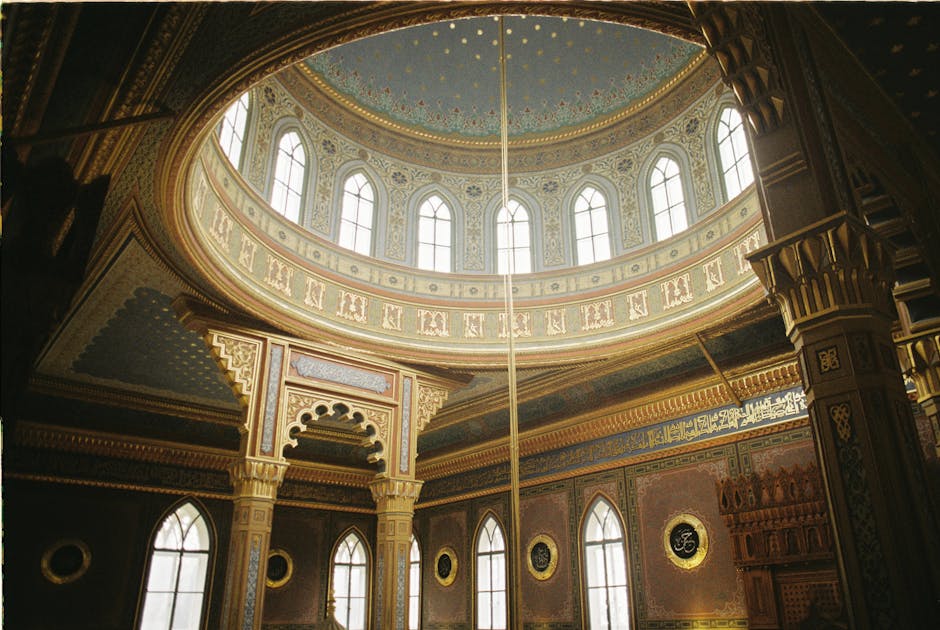
Architectural curiosity: notice how relatively small openings and the building’s layout direct the gaze toward the dome. That’s intentional: the builders wanted the worshipper’s eye to lift up to the heavens. In some corners of the Battistero degli Ariani you can see joints and masonry repairs that speak of hurried interventions after earthquakes or partial demolitions — an invisible map of the city’s hardships.
Another documentary tidbit: 19th-century parish registers found near the baptistries helped identify names of notable baptized individuals and dates linked to epidemics and social events. Local researchers still use these sources to trace Ravenna’s social history through its religious life.
Smart visiting: suggested route and practical cautions
Suggested half-day route: start at the Battistero Neon (Piazza Duomo) right at opening, then walk three minutes to the Basilica di San Vitale (Piazza San Vitale, 5). After a coffee break, head to the Battistero degli Ariani (Via Paolo Costa, 1) and finish at the Basilica di Sant’Apollinare Nuovo (Via di Roma, 37). This route highlights stylistic differences and leaves room for regular rests.

Practical cautions:
- Respect no-flash rules and conservation guidelines; some areas may be closed for restoration.
- Floors can be uneven; wear comfortable, slip-resistant shoes.
- If you take photos, favor wide shots without flash to protect pigments.
- Check opening hours the day before your visit: times can change for events or works.
Finally, bring a small flashlight to inspect base-level details (where permitted) and a paper guide or app that explains the figures in the mosaics — it will turn your visit into an experience that’s both aesthetic and scholarly.
Conclusion
Ravenna’s baptistries, the Battistero Neon (Battistero degli Ortodossi) and the Battistero degli Ariani, are outstanding witnesses to a past where art, faith and power met in stone and glass. Each tells a different story: one an enveloping, narrative theology, the other a geometric, frontal solemnity. Together they offer a twofold reading of the city’s rich religious mosaic — literally and symbolically.
Beyond dates and names, it’s the small anecdotes, popular rituals and architectural interventions that bring these places to life: forgotten processions, rescues of tesserae during threats, meticulous restorations that have restored nearly lost colors. For the visitor, the rewards are many: the aesthetic dazzle of golds and blues, an understanding of ancient religious tensions, and the simple human pleasure of walking in spaces that shaped lives.
Practically speaking, prepare your visit: ask ticket desks about combined passes, pick quieter hours for photography, follow conservation rules and allow time for contemplation. And above all, take the time to look up at the domes: there lie the most intimate stories — those of light, water and passage. Ravenna is small, but its mosaic is vast — and its baptistries invite you to stand under a tiled sky, listen to centuries of prayers and leave with images that will linger in your memory.