





Introduction: Diving into the Mosaic Secrets of Ravenna’s Orthodox and Catholic Baptisteries
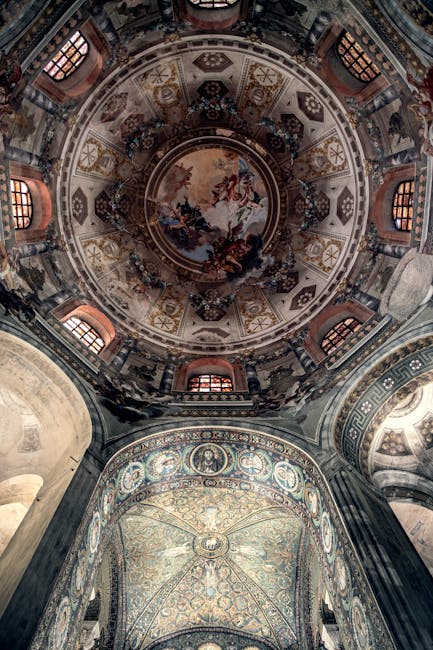
Ravenna feels like an open-air museum where time has paused beneath gilded vaults and cobbled streets. At the heart of this Byzantine treasure trove, two small buildings arrest attention with the visual power and technical finesse of their mosaics: the Battistero Neoniano, often called the Baptistery of the Orthodox, and the Battistero degli Ariani, historically tied to non‑Nicene Christian rites and later to the Catholic tradition (hereafter referred to as the “Catholic Baptistery” in the broad sense of Ravenna’s religious evolution). Compact yet overwhelmingly ornate, these two baptisteries tell stories of faith, authority and extraordinary craftsmanship that helped shape medieval Europe’s religious and artistic identity.
Your introduction to these sites begins with light: slanted rays that heighten the shimmer of glass and gold tesserae, turning the dome into an actual sky. Biblical scenes, Christological figures and baptismal processions speak directly to the visitor; the eye uncovers details that seem to reveal themselves the longer you linger, as if each tessera carries a memory to be unveiled. This role as memory is crucial: between the 5th and 6th centuries Ravenna was the crossroads of a dual Christian culture — Roman and Byzantine — where mosaic became the official language of faith. The Battistero Neoniano and the Battistero degli Ariani are microcosms of that language: concentrated, refined, almost intimate, these spaces invite silence and contemplation.
This article will bring you close to the mosaic secrets of these two baptisteries. You’ll find detailed descriptions of the mosaic scenes — the majesty of Christ in glory, baptisms and processions, the symbolism of rivers and stars — plus essential practical information: exact addresses, opening hours, ticket prices in euros, tips to avoid crowds or to read the mosaics more effectively, and suggested routes to extend your day in Ravenna (Basilica di San Vitale, Mausoleo di Galla Placidia, Battistero degli Ariani, Piazza del Popolo, and more). I’ll also share photography tips and the best times of day to capture the golden luminescence of the mosaics.
Before you step through the portals, remember that behind the splendor are countless hands and centuries of restoration. The mosaics survived political shifts, floods and conservation campaigns that are themselves part of the story. Understanding those restorations helps you grasp how we read the past today. Be ready to look closely, to lift your gaze toward the domes, and to let the richness of the tesserae transform your idea of the sacred and the pictorial. Ravenna welcomes you — and these baptisteries, small in footprint but vast in meaning, await for a sensory and intellectual immersion.
Battistero Neoniano (Battistero degli Ortodossi): address, mosaics and atmosphere
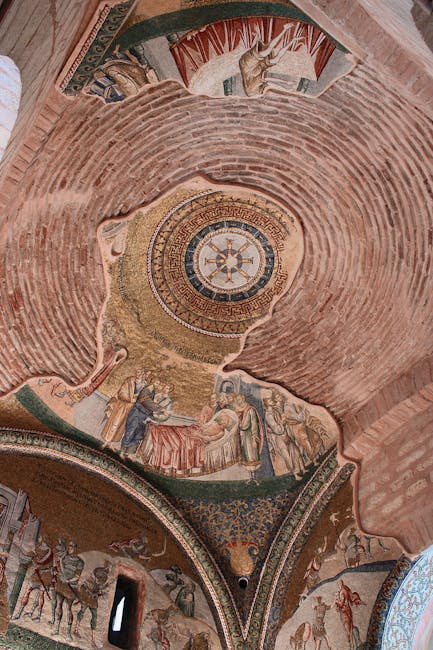
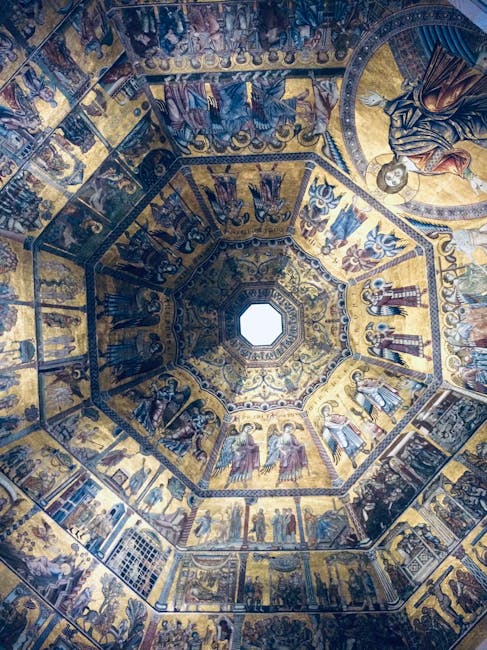
The Battistero Neoniano, also known as the Battistero degli Ortodossi or the Baptistery of the Orthodox, sits in the heart of Ravenna’s monumental quarter. Exact address: Battistero Neoniano, Piazza del Duomo, 2, 48121 Ravenna RA, Italia. You enter through a small door into a circular space beneath a low dome, entirely covered in mosaics. The dome’s central motif shows the Christ child being baptized by Saint John the Baptist, surrounded by a procession of newly baptized figures holding branches — a scene of rare narrative and theological intensity.
Price: standard single admission roughly €3.00 (indicative price, March 2026). The baptistery is often included in the combined « Ravenna Ticket » with other monuments (Basilica di San Vitale, Mausoleo di Galla Placidia, Battistero degli Ariani) for about €11.50; reduced rates and free admission apply for under‑18s and some groups (check the official site). Opening hours: generally 9:00–19:00 in high season (April–October) and 9:00–17:00 in low season (November–March). Occasional weekly closures and public‑holiday hours may apply — verify before you go.
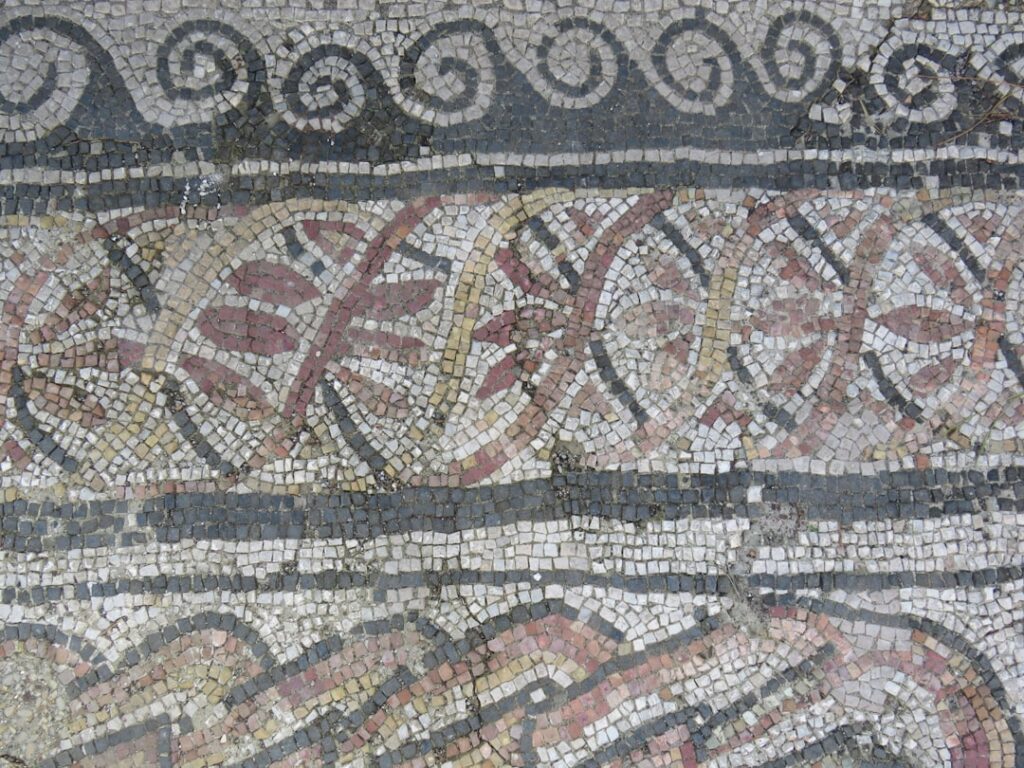
Immersive description: on entering, you can almost feel the warm golden glow radiating from the tesserae. The tiny glass and stone pieces, set with astonishing density and precision, don’t just decorate — they guide the eye and structure how you read the sacred scene. The background is predominantly gold; the figures are stylized yet expressive, and Byzantine perspective invites symbolic rather than naturalistic interpretation. The opus sectile floor features sober geometric patterns that contrast with the dome’s complex narrative.
Practical tips: arrive early, ideally at opening time, to enjoy calm and a gentle light undisturbed by crowds. Bring a pocket magnifier if you love inspecting tesserae up close (a treat for art lovers). Guided groups often need reservations — opt for a self‑guided visit or an audio guide if you want to take your time with each scene. Do not touch the mosaics: modern restorations are delicate. Finally, combine this visit with the Basilica di San Vitale (Piazza San Vitale, 1), just a short walk away.
 Click here to book your tickets for the UNESCO-listed mosaics
Battistero degli Ariani: history, mosaics and liturgical meaning
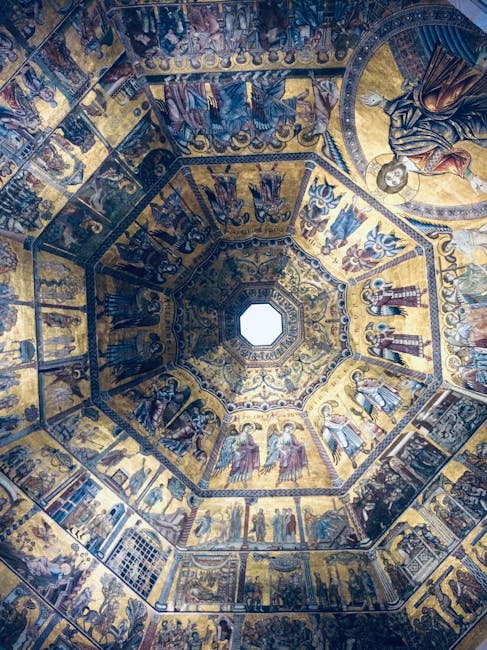
The Battistero degli Ariani (Arian Baptistery) is another jewel of Ravenna. Address: Battistero degli Ariani, Via Paolo Costa, 1, 48121 Ravenna RA, Italia. Built in the 5th century for the Arian community that ruled Ravenna under Theodoric, it displays dramatic and distinctive mosaic decoration: the dome shows Christ in majesty as a Pantocrator surrounded by angels, while the lower band illustrates scenes tied to baptism and Christian life.
Price: individual admission approximately €3.00 (indicative price, March 2026). The site is included in combined Ravenna passes (≈€11.50). Opening hours: 9:00–19:00 in high season; 9:00–17:00 in low season. The baptistery may be closed for guided tours or conservation events; check the official site or Ravenna’s tourist office before visiting.
Detailed description: the main effect is that of a compact architecture that concentrates attention. The dome, higher than the Neoniano’s, gives you a slightly more top‑down view of the central Christ figure, surrounded in places by zodiacal symbols — evidence of how Christian and pagan motifs merged in the era’s visual vocabulary. The mosaic floor and related bas‑reliefs complete the visual narrative. The overall atmosphere is more solemn, almost ceremonial, recalling the rite’s baptismal use and its theological significance.
Practical tips: to photograph the dome from the floor, use a wide‑angle lens and look for the strongest contrast — natural light filtering in often creates highlights on the gold tesserae. Visit in the late afternoon if you prefer a moodier, more subdued ambiance. If your time is limited, prioritize the Battistero degli Ariani in the morning and the Battistero Neoniano later in the morning for a comparative reading of the two mosaic styles.
Click here to book a guided walking tour of Ravenna’s monuments
Reading the mosaics: symbols, techniques and restoration
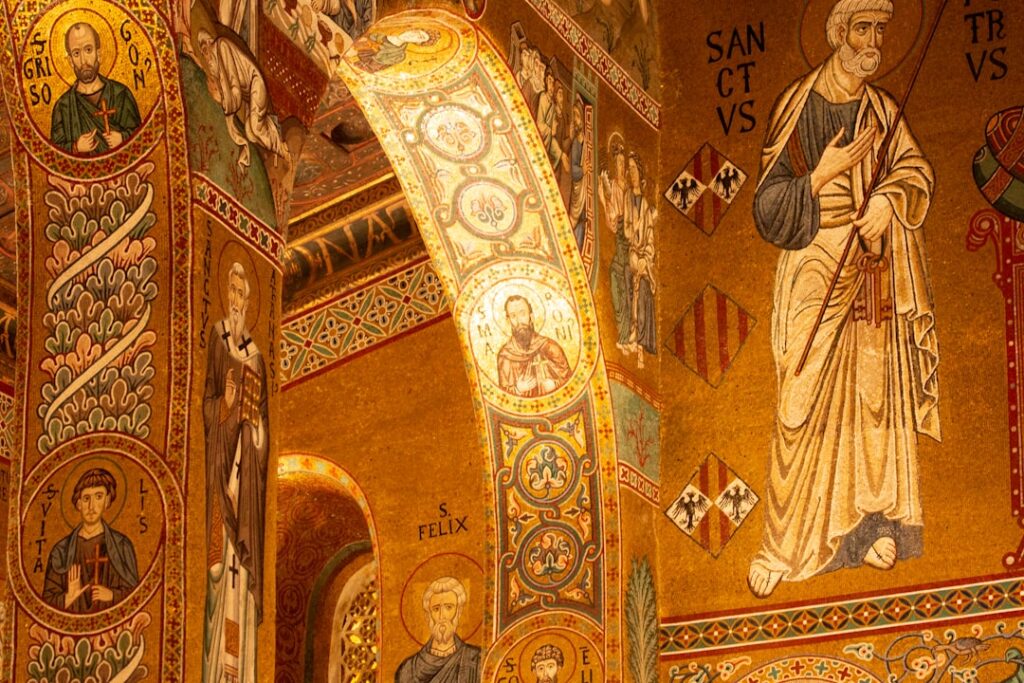
Understanding Ravenna’s mosaics means learning a visual language. The tesserae — small cubes of colored glass and gold — are set using techniques that play with light and angle to produce depth and brilliance. The scenes in the baptisteries are didactic: they teach baptismal theology, Christ’s victory over death, and sometimes the political importance of the patron. Images of the Christ child or adult, figures of John the Baptist, baptismal processions and aquatic symbols are all keys to reading the faith of the age.
Technically, tesserae are often set on edge so reflections change with the viewer’s position. Gold backgrounds are not uniform; they’re built in layers to achieve a shimmering effect. Restoration is another crucial chapter: 19th‑ and 20th‑century consolidation and cleaning campaigns required conservation choices — some elements were reassembled, others stabilized in place. That means what we see today is frequently a dialogue between the original and the present‑day hand.
Tips for interpretation: come close, but don’t touch. First read the scene as a whole, then move into details: how do the gazes of the figures meet? Where is the light concentrated? Which motifs recur (waves, stars, palmettes)? Bring a notebook or use your phone to photograph details (no flash). Finally, join a specialist mosaic tour if you want to dive deeper into technique and history.
Click here to discover Ravenna’s mosaics with an expert guide
Local practical tips: routes, transport, eating and respecting the site
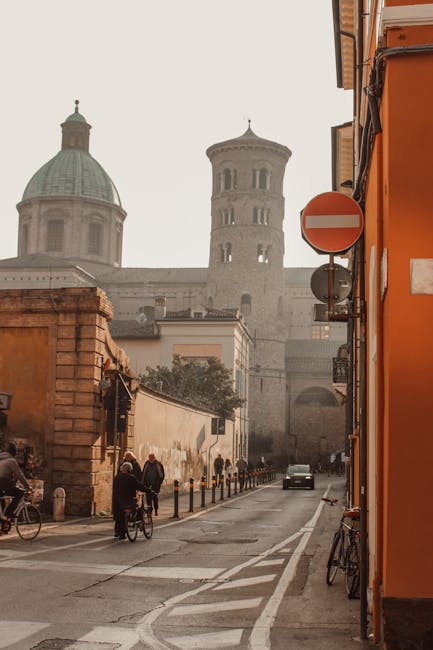
Getting to the baptisteries is straightforward from Ravenna’s train station (Stazione di Ravenna, Piazza Luigi Carlo Farini, 3). On foot, plan 15–20 minutes to reach the monumental quarter. Urban buses (ATMA / Start Romagna) also serve the center; single tickets are around €1.50 (buy before boarding). If you arrive by car, prefer peripheral parking (Parking Piazza Kennedy or Parking Parco Teodorico) and walk into the center: the historic core often has traffic restrictions.
Quieter times: very early morning (opening time) and after 16:00 help you avoid school groups and cruise visitors. Buy the Ravenna Card online if you plan to visit several monuments. For food: try Trattoria del Centro (Via Corrado Ricci, 12, 48121 Ravenna) or Pasticceria Berti (Via Cavour, 1) for a quick espresso and local pastries. Meal budget: mains typically €8–€18; coffees €1.20–€2.00.
Respecting the site: don’t touch the mosaics, avoid flash photography, and dress respectfully in religious spaces. Audio guides and brochures in English and French are often available at the entrance. Above all, take your time: Ravenna is a city for contemplation, not just ticking off sights.
Conclusion: Why visit and how to extend the experience
Ravenna’s baptisteries — the Battistero Neoniano (Battistero degli Ortodossi) and the Battistero degli Ariani — are small sanctuaries with exceptional symbolic and visual power. Their modest footprint is deceptive: each tessera tells a story of faith, technical innovation and cultural exchange between Rome and Byzantium. Visiting them offers immersion into an art form that was not merely decorative but pedagogical: these mosaics taught, persuaded and consecrated space.
Coming to Ravenna for these baptisteries means slowing your pace, lifting your eyes and embracing contemplative patience. Practical details (addresses: Battistero Neoniano, Piazza del Duomo, 2, 48121 Ravenna RA; Battistero degli Ariani, Via Paolo Costa, 1, 48121 Ravenna RA; prices: about €3.00 individual and combined passes ≈€11.50; hours: 9:00–19:00 high season and 9:00–17:00 low season) will help you plan, but always check official updates before departure. The best tip remains to combine these two visits with the Basilica di San Vitale (Piazza San Vitale, 1), the Mausoleo di Galla Placidia (Via San Vitale, 85) and a stroll through the historic center to complete your mosaic reading of Ravenna.
Ultimately, these baptisteries are gateways to a broader understanding of Western Byzantine art. They invite not only viewing but questioning: how does the sacred materialize in material? How does light transform the narrative? If you love history, art and deep travel experiences, Ravenna and its baptisteries await with golden secrets that shine on through the centuries.
Click here to book a guided tour of Ravenna with tickets included